#4 Crushed Stone for Florida Washouts and Soft Ground
Florida sand can leave a driveway base needing more support. #4 Crushed Stone provides an open-draining layer beneath areas carrying regular traffic.
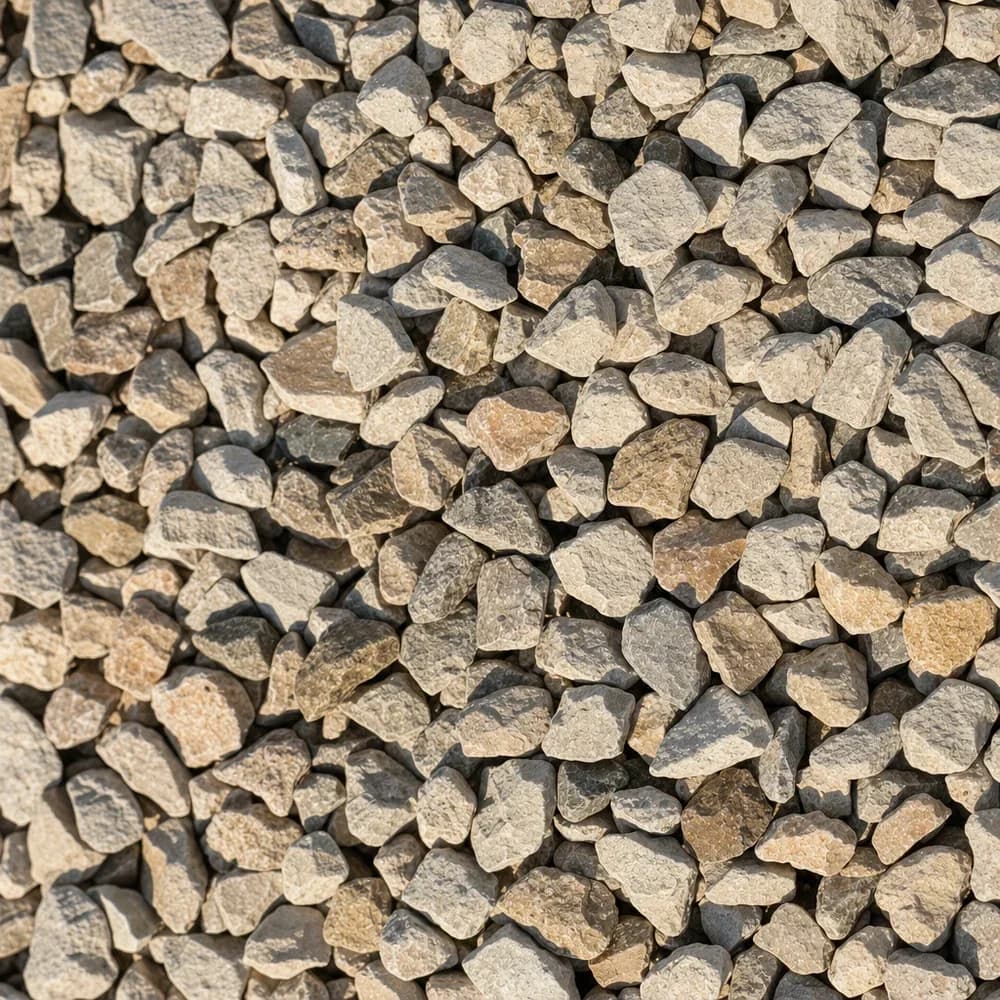
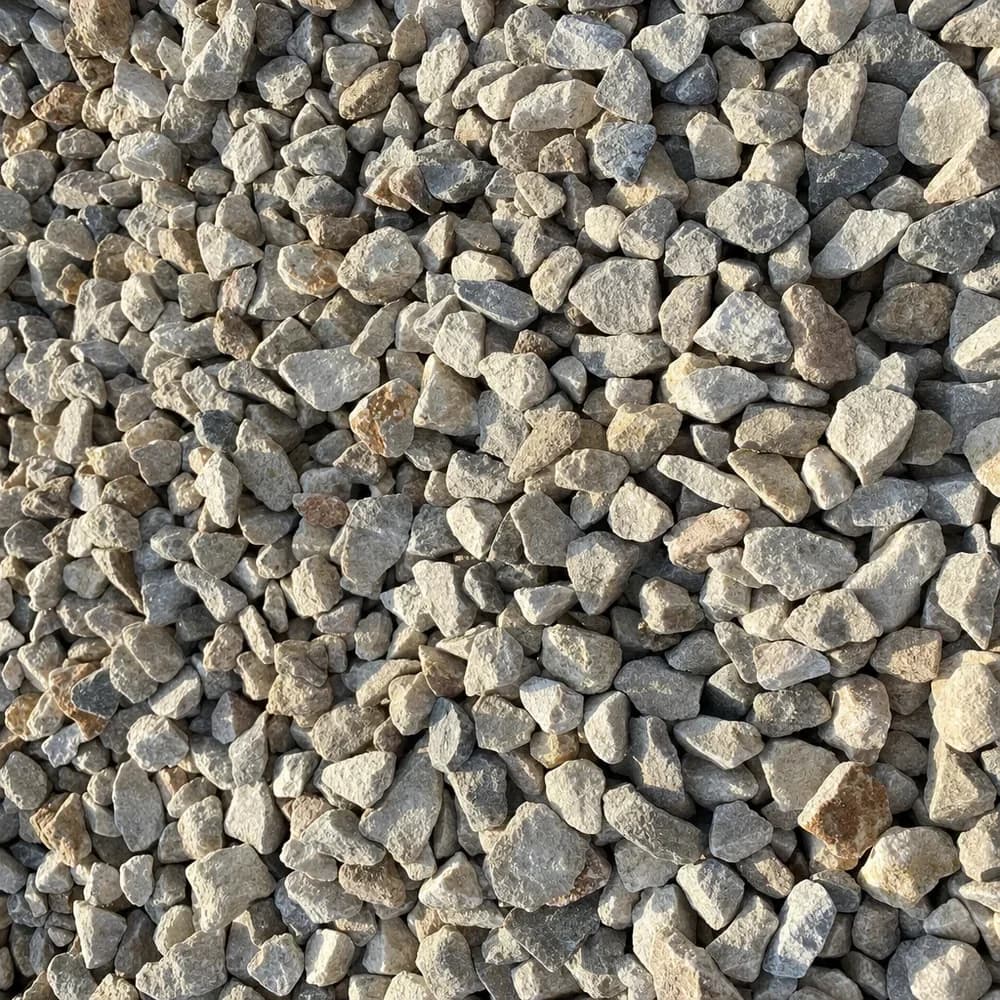
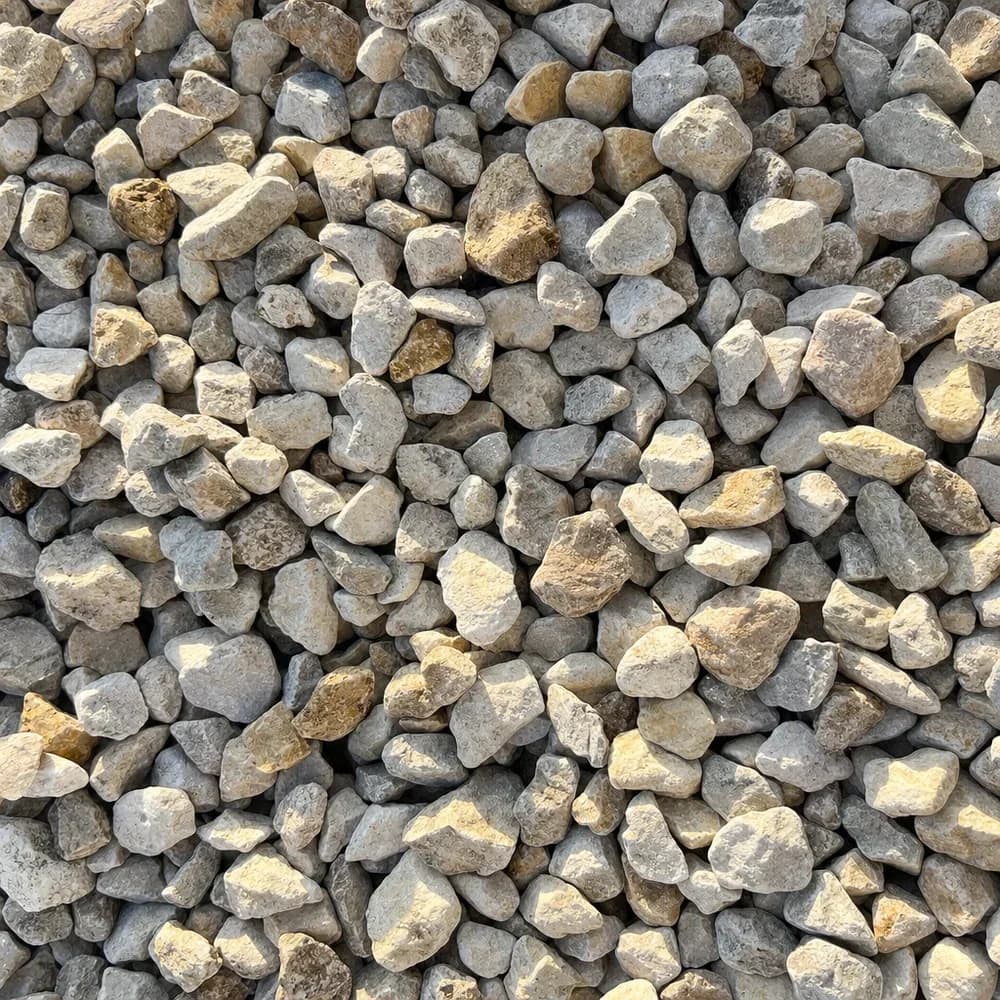
- Size: About 3/4 inch to 1-1/2 inches
- Grading: #4
- Type: Angular crushed stone
From $483 for 1 ton, delivery included (larger loads cost significantly less per ton)
Free delivery included
Free delivery anywhere in Florida
Pick a delivery date
Weekday delivery, earliest Oct 30
“Needed crushed stone and these guys made ordering easy, delivery went smooth, and I'd definitely order again.”
Maria V. · Verified Buyer
Get a Free Quote
Fill out the form and our sales team will get back to you within the hour.
Size and Grading
- Size
- About 3/4 inch to 1-1/2 inches
- Grading
- #4
- Type
- Angular crushed stone
June through November is the stretch that sets the deadline on this one. A washout that looks like a nuisance in April is a scoured channel by September, because the rain here does not arrive evenly: an afternoon storm can drop more water in an hour than the ground can take, and a tropical system can do it for a day. #4 Crushed Stone is angular rock running about 3/4 inch to 1-1/2 inches with nothing fine in the mix, which is exactly the size that stays where it is put when water arrives all at once.
The problem it is bought to fix, and the storm that creates it
Two versions of the same problem turn up on Florida lots. One is a soft sub-base: a lane, a pad or a patio bed that sits on sand which drains fine but gives way under a wheel, so the surface above it ruts or dips. The other is scour: a ditch, a bank or a downspout run where concentrated flow lifts the ground and carries it off, leaving a trench that gets deeper every storm.
Both are water problems rather than bearing problems, which is why the answer is a coarse open stone rather than more of whatever failed. Stone this size is too heavy for storm flow to move and too coarse for sand to pump up through quickly, and the voids between pieces let a large volume of water pass rather than damming it.
Why #4 crushed stone stays put where sand walks away
Loose quartz sand has no cohesion. Wet it and it flows; put a wheel on it and it displaces sideways. Angular stone this size does the opposite, because the broken faces lock against each other and the mass of each piece is far beyond what surface flow can shift.
What it will not do is pack into a firm surface. There are no fines in the grading, so nothing fills the voids and nothing binds. Roll it all day and it stays a loose matrix of stone with air between the pieces. That is a feature when it sits low in a build carrying water away, and a defect the moment anyone tries to walk on it or park a car on it directly, which is why it belongs under the finished surface rather than as the finished surface.
Cutting, lining and placing the stone before the rain returns
Strip organics and soft material out first. Anything left to rot under an open layer turns to a hollow, and in this climate that takes months rather than years.
Lay a non-woven separation fabric across the whole cut. On sand it is the difference between a layer that works for a decade and one that silts up in two wet seasons, because fine quartz travels in water and the voids are the first place it goes. Carry the fabric up the sides of a ditch or a trench and leave enough overlap to fold across the top.
Place the stone in one lift rather than trying to build it up in thin passes, level it with a bucket or a rake, and then leave it alone. Settle it by hand where it matters; running a plate over open stone only fractures the edges and closes the voids. If the finished area has to be usable, the cap goes over the top: a compacting base mix for anything driven on, or a finer decorative stone for anything looked at.
What a dry creek bed and a fire pit ring need after a named storm
Check both after the first real blow rather than on a schedule. On a dry creek bed, the things to look at are the head of the run, where flow enters and tends to undercut, and any bend, where the water throws itself at the outside edge. Pull displaced stone back into the channel and add a few pieces at the entry point if it has scoured.
Around a fire pit, the failure is migration rather than scour. Stone this size does not roll far, but foot traffic and raking gradually push it outward past a soft edge, so a defined border of timber, steel or set pavers is worth putting in from the start. In both cases, look for fabric showing through: exposed fabric degrades in sunlight, and once it fails the sand starts moving again.
Yards and tons for a 16 by 18 patio base, a 40 foot creek bed and a fire pit ring
The calculator takes feet for length and width, inches for depth, handles several areas at once, and runs (L x W x D/12) / 27 = cubic yards before converting by density. This site publishes #4 stone at about 2,900 lb per cubic yard, roughly 1.45 tons per yard. Three hypothetical examples:
- A drainage course under a 16 ft by 18 ft paver patio, 4 inches deep. 16 x 18 = 288 sq ft. 288 x (4/12) = 96 cubic feet. 96 / 27 = about 3.6 cubic yards, or roughly 5.2 tons. The compacting base and bedding course above it are separate orders.
- A dry creek bed 40 ft long, averaging 4 ft wide, 6 inches deep. 40 x 4 = 160 sq ft. 160 x 0.5 = 80 cubic feet. 80 / 27 = about 3 cubic yards, or roughly 4.3 tons.
- A 4 ft wide ring of stone around a 5 ft diameter fire pit, 4 inches deep. Outer circle 13 ft across, so 3.1416 x 6.5 x 6.5 = about 133 sq ft, less the pit at 3.1416 x 2.5 x 2.5 = about 20 sq ft, leaving 113 sq ft. 113 x (4/12) = about 37.7 cubic feet. 37.7 / 27 = about 1.4 cubic yards, or roughly 2 tons. A finer stone goes over the top where people sit.
Work your own dimensions through the stone calculator, and keep the five percent it adds by default where the cut is freshly dug, since the bottom of the layer always keys into whatever is under it.
To order, settle the figure, pick a quantity and a delivery date here, and set aside a firm tip spot with clear overhead room. Delivery is arranged at checkout by ZIP code and the truck needs a route to somewhere the load can be dropped.
Quickly Calculate How Much You Need
Material: #4 Crushed Stone
How to Measure
Measure the length and width of your project area in feet
Decide on depth in inches (2" for landscaping, 4" for driveways)
Enter the values above and we'll calculate the tonnage you need
Need help figuring out the right amount? We can help!
Call or text us at (813) 896-2664 and we'll help you calculate the right quantity for your project.
Not sure how much you need? The Stone Calculator has depth guides, coverage charts and worked examples for this material.
Frequently Asked Questions About #4 Crushed Stone
Customer Reviews
Had crushed stone delivered by them and ordering was smooth from start to finish.
Doug J. · Tampa, FL · Verified Buyer
Went with them for crushed stone and I'm really happy with how it turned out. The driver was friendly and careful about where he dropped it, which made the whole thing easy.
Angela G. · Jacksonville, FL · Verified Buyer
Decided on crushed stone from Florida Rock Supply and the price felt fair for what I got. They kept me updated the whole time, and I'm really happy with how it all turned out.
Tara L. · Jacksonville, FL · Verified Buyer
Grabbed crushed stone from Florida Rock Supply and the free delivery made it super easy. Really happy with how it turned out, I'd definitely order again and recommend them.
Wendy C. · Fort Lauderdale, FL · Verified Buyer
Needed crushed stone and these guys made ordering easy, delivery went smooth, and I'd definitely order again.
Maria V. · Tampa, FL · Verified Buyer
#4 Crushed Stone has 5 verified customer reviews with an average rating of 4.8 out of 5.
#4 Crushed Stone delivery across Florida
- Jacksonville
- Miami
- Tampa
- Orlando
- St Petersburg
- Port St Lucie
- Hialeah
- Cape Coral
- Tallahassee
- Fort Lauderdale
- Pembroke Pines
- Hollywood