Railroad Ballast for Florida Pads and Work Lanes
Railroad Ballast has the rough, angular feel needed beneath Florida equipment pads and work routes where sandy ground needs a load-bearing stone layer.
- Size: Roughly 1 inch to 2.5 inches
- Grading: Graded to interlock under load while draining freely
- Type: Large angular crushed stone
From $483 for 1 ton, delivery included (larger loads cost significantly less per ton)
Free delivery included
Free delivery anywhere in Florida
Pick a delivery date
Weekday delivery, earliest Oct 30
“Grabbed railroad ballast from these guys and the free delivery was a nice bonus. Driver was friendly and careful about where he dropped it, really happy with the whole thing.”
Brian J. · Verified Buyer
Get a Free Quote
Fill out the form and our sales team will get back to you within the hour.
Size and Grading
- Size
- Roughly 1 inch to 2.5 inches
- Grading
- Graded to interlock under load while draining freely
- Type
- Large angular crushed stone
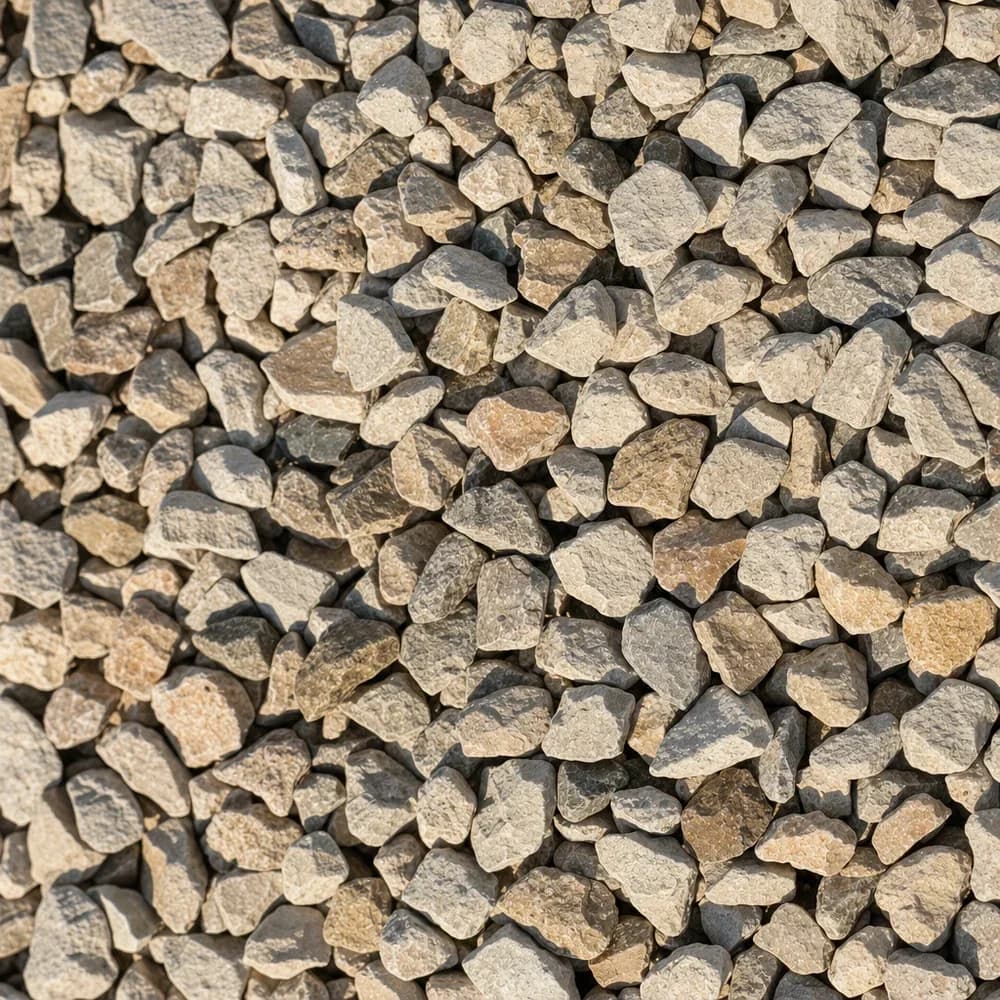
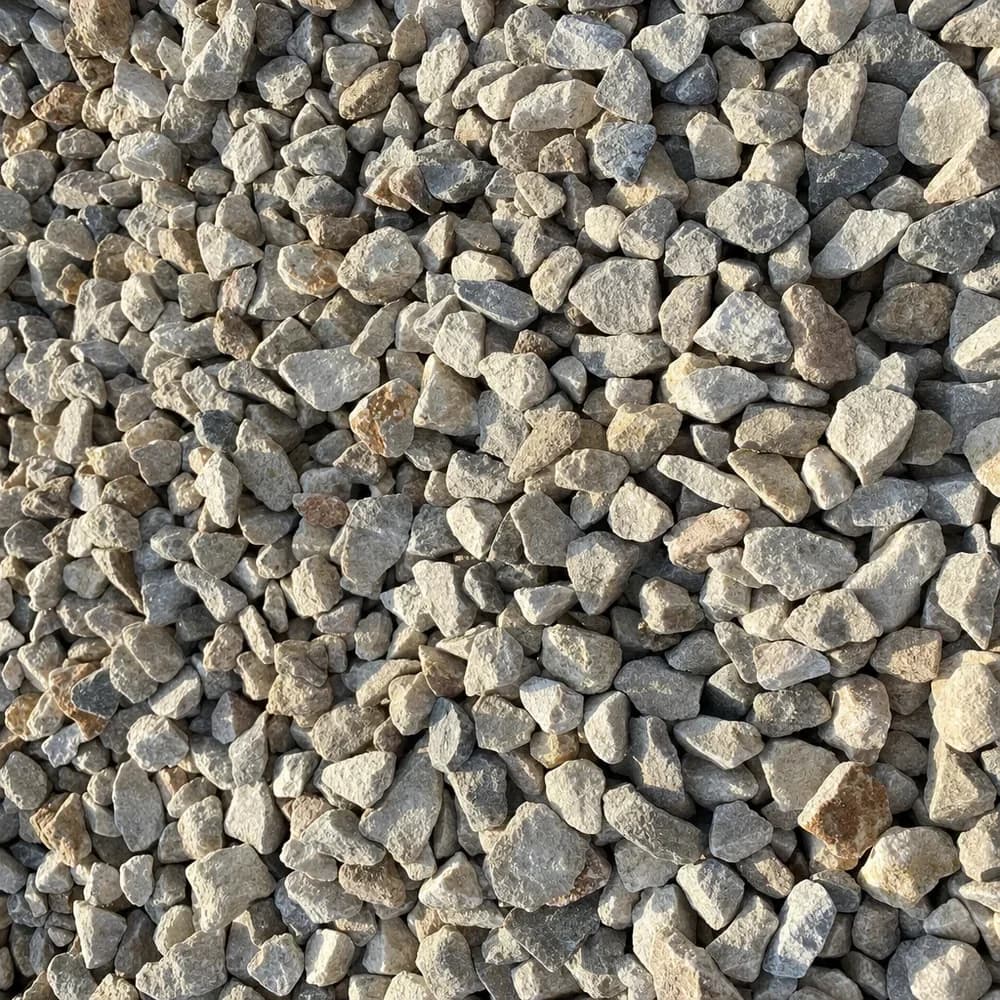
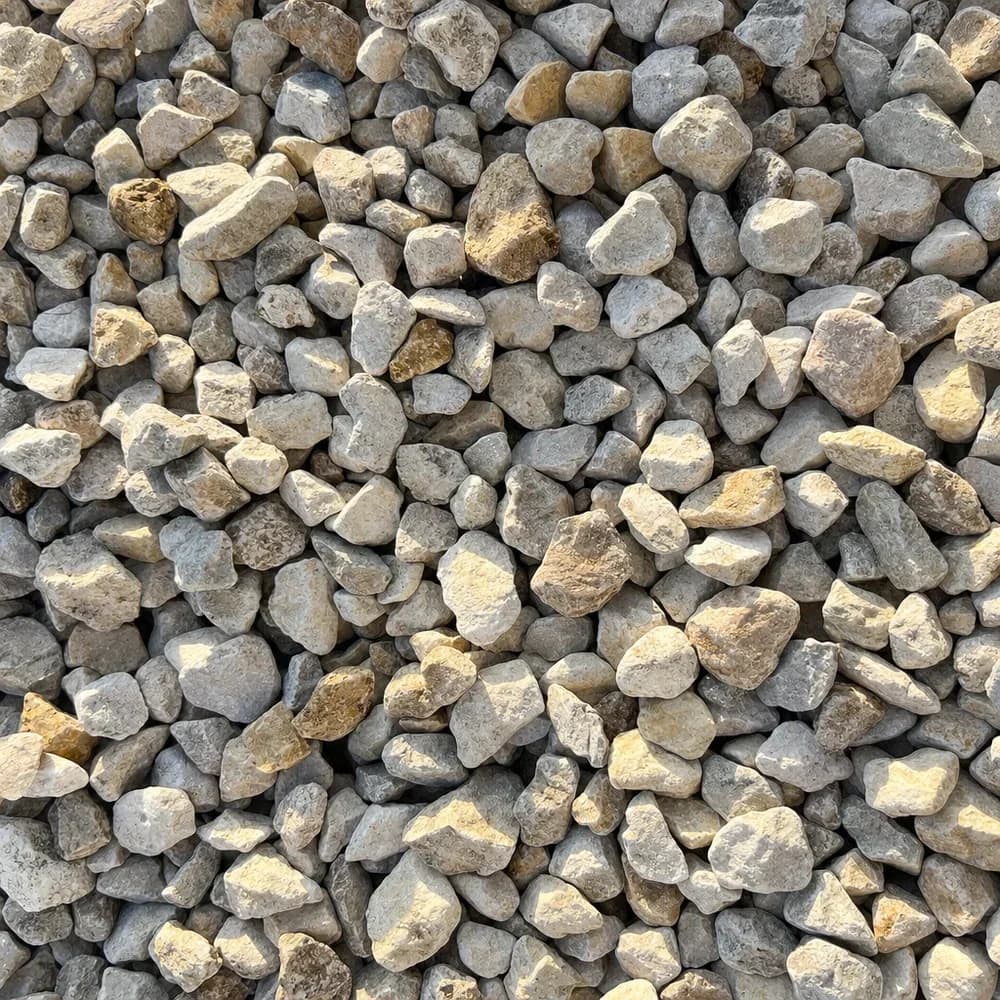
Tip a load out and what lands is not gravel. The pieces run roughly 1 inch to 2.5 inches, each one broken rather than rounded, with sharp faces and flat planes that catch against each other, and the heap sits at a steep angle instead of spreading out the way a fine material does. Pick one up and it has weight to it. Railroad Ballast is graded to interlock under load while draining freely, and everything about how it behaves on a Florida lot follows from those two words: interlock and freely.
Railroad ballast, limerock base and #4 stone side by side on sand
Three materials get considered for the same soft-ground problem, and they are not interchangeable.
Limerock base is the compacting one. It carries coarse stone, medium stone and fines in one graded mix, and once spread damp and rolled it locks into a dense layer that holds a wheel and sheds water off its surface. That is the material a finished drive or pad is built on.
Ballast is the opposite approach. There is nothing fine in it, so it never locks into a dense mass; the load is carried by stone bearing on stone, and water goes straight through. On ground that stays wet, that difference matters, because a dense layer laid on saturated sand can pump and soften from below while an open layer drains and stays honest.
#4 crushed stone sits close to ballast in size and does a similar job lower in a build, with a slightly smaller and more uniform range. A crusher run mix is the third option, a graded blend that behaves more like limerock than like ballast. The rule of thumb on a soft Florida lot: if the problem is bearing on dry sand, build a compacted base; if the problem is water and mud, use the open stone and let it drain.
A pole barn pad, a soft single-car drive, and the walkway it will ruin
The equipment pad is where this material is most at home. Stone this size does not pump up into the mud underneath the way a finer layer does, it takes a tracked machine or a loaded trailer without rutting, and it keeps working while the ground beneath it is still soaked.
On a single-car drive it belongs at the bottom rather than at the top. Used as a lower course on ground that stays wet, it gives the build somewhere for water to go and a stable mass to sit on, with a compacting base and a finer surface over it. Left bare as the driving surface it is punishing on tires and impossible to walk on.
A flagstone walkway is the job it should never touch. Bedding flagstone wants a fine, screedable material over a compacted base, and setting flat stone on 2 inch rock gives you point contacts, rocking slabs and a path that gets worse each season. Send that job to a fines-based bedding material and keep the ballast for the parts nobody walks on barefoot.
How deep it goes over flatwoods sand, and what caps it
On soft or wet subgrade, plan a ballast course of about 6 inches for a pad taking equipment, and about 4 inches where it is the lower course under a light drive. Thinner than that and individual stones work down into the sand rather than acting as a layer.
Separation fabric under it is not optional on sand. Without it, fine quartz migrates up into the voids over a few wet seasons and the layer slowly turns into a stony version of the ground it replaced. With it, the stone stays clean and keeps draining.
What goes on top depends on the use. A working yard or an equipment pad can be left as bare ballast. A pad that people walk across, or a lane that cars use, wants a compacted base layer over the stone and a finer surface above that, so the coarse course is doing structural work out of sight.
Yards and tons for a 24 by 30 pole barn pad and a 70 foot drive
The calculator takes feet for length and width, inches for depth, handles several areas at once, and runs (L x W x D/12) / 27 = cubic yards before converting by density. This site publishes #4 stone and railroad ballast at about 2,900 lb per cubic yard, roughly 1.45 tons per yard. Two hypothetical examples:
- A pole barn pad, 24 ft by 30 ft, ballast 6 inches deep. 24 x 30 = 720 sq ft. 720 x 0.5 = 360 cubic feet. 360 / 27 = about 13.3 cubic yards, or roughly 19.3 tons.
- A single-car drive, 70 ft by 10 ft, with ballast as a 4 inch lower course. 70 x 10 = 700 sq ft. 700 x (4/12) = about 233.3 cubic feet. 233.3 / 27 = about 8.6 cubic yards, or roughly 12.5 tons. The base and surface courses above it are separate orders.
A flagstone walkway is deliberately left off that list, because the right answer there is a different product entirely. Keep the stone calculator's five percent on freshly cut ground, since the first stones always press into the subgrade. Run your own dimensions through the stone calculator before choosing a quantity.
Picking a tip spot a loaded truck can reach in the wet season
Heavy stone means heavy loads, and a pad-sized order is a serious weight arriving in one go. Choose the drop before the day. Firm ground, clear overhead, and room for the body to lift, and on a low lot in the rainy months that usually means the existing drive rather than a spot near the work.
Have the area cut, the fabric down and a machine on site before the load lands, because stone this size does not move far by wheelbarrow and a heap sitting in the wrong place is a second job. Delivery is arranged at checkout by ZIP code and the driver needs a clear route to the dump spot. When the figure is settled, choose a quantity and a date on this page.
Quickly Calculate How Much You Need
Material: Railroad Ballast
How to Measure
Measure the length and width of your project area in feet
Decide on depth in inches (2" for landscaping, 4" for driveways)
Enter the values above and we'll calculate the tonnage you need
Need help figuring out the right amount? We can help!
Call or text us at (813) 896-2664 and we'll help you calculate the right quantity for your project.
Not sure how much you need? The Stone Calculator has depth guides, coverage charts and worked examples for this material.
Frequently Asked Questions About Railroad Ballast
Customer Reviews
Went with the team for railroad ballast and everything showed up right when they said it would. Pricing was fair, and I'd definitely order from them again.
Bill F. · Jacksonville, FL · Verified Buyer
Ordered railroad ballast from these guys and the whole thing was simple. Free delivery was a nice bonus, and I'm really happy with how it all turned out.
Scott W. · Orlando, FL · Verified Buyer
Needed railroad ballast and the team made it super easy, plus the free delivery was a nice bonus. It showed up on the day they promised and I'm really happy with how it all went.
Greg R. · St. Petersburg, FL · Verified Buyer
Needed railroad ballast delivered and this company made it super easy. The load showed up on time, and the railroad ballast was exactly what I needed. I'd definitely order again and recommend them.
Steve G. · Jacksonville, FL · Verified Buyer
Grabbed railroad ballast from these guys and the free delivery was a nice bonus. Driver was friendly and careful about where he dropped it, really happy with the whole thing.
Brian J. · Tampa, FL · Verified Buyer
Railroad Ballast has 5 verified customer reviews with an average rating of 5 out of 5.
Railroad Ballast delivery across Florida
- Jacksonville
- Miami
- Tampa
- Orlando
- St Petersburg
- Port St Lucie
- Hialeah
- Cape Coral
- Tallahassee
- Fort Lauderdale
- Pembroke Pines
- Hollywood