Mulch Calculator for Beds, Rings and the Bare Sand Between Them
Enter your project dimensions
Stand at the corner of the house and look at what you are actually about to cover: a few rings around young palms, and a bed that runs the length of the wall. They feel like one job. They are nowhere near the same quantity, and this mulch calculator will show you the gap before you load a car with bags you did not need or order a yard more than fits on the tarp.
Four palm rings measured against a full run of foundation bed
Both of these are hypothetical, with round numbers you can check.
Four rings, each five feet across, mulched three inches deep. A five-foot circle covers 19.6 square feet, so four of them is 78.5 square feet. 78.5 x 3 = 235.5, divided by 12 is 19.6 cubic feet, divided by 27 is 0.73 cubic yards. At 13.5 bags to the yard that is about ten bags of 2 cubic feet.
The foundation bed runs 62 feet along the wall at an average four feet deep, which is 248 square feet, also at three inches. 248 x 3 = 744, divided by 12 is 62 cubic feet, divided by 27 is 2.30 cubic yards, or about 31 bags.
Same depth, same afternoon, three times the material. It is the footprint that decides, not how important the bed looks from the drive.
Measuring curved beds before the mulch calculator does the rest
Few beds in a Florida yard are rectangles. The tool gives you three ways in. Rectangle takes a length and a width in feet, and for a bed that bulges and narrows, the honest number is an average width taken from three or four measurements along its run. Circle takes a single diameter in feet and is the fastest way to handle a tree ring or a palm collar. Multiple areas lets you enter as many as five separate pieces, so the front bed, two rings and the strip by the mailbox all land in one total.
Depth goes in as inches, anything from a quarter inch up to 24. The material select sets the weight behind the tons line, and a checkbox adds an optional 5 percent for compaction and spillage. On mulch that box is not really about compaction, since shredded material does not pack down the way base rock does. It starts ticked: leave it on if you are carting a long way or unloading onto a windy driveway, and untick it for a couple of tidy beds beside the door.
The results box shows cubic yards, cubic feet and tons together, and can email the figure to you.
Twenty-seven cubic feet, thirteen and a half bags and six hundred pounds
A cubic yard is 27 cubic feet. That single fact is what turns a bag count into a bulk order, because a garden center bag holds 2 cubic feet, and 27 divided by 2 is 13.5. Thirty-one bags is a little over two yards. Ten bags is about three quarters of one.
The tons line surprises people. Shredded Mulch is published here at roughly 600 lb a cubic yard, which is 0.30 tons, the lightest figure on the site by a wide margin and about a fifth of what a yard of stone weighs. That is why mulch is bought and delivered by volume rather than weight, and why three yards of mulch weighs under a ton while three yards of stone weighs over four.
For coverage at a glance: one cubic yard spreads 162 square feet at 2 inches, 108 square feet at 3 inches, and 81 square feet at 4 inches.
Ordering a little long when sandy beds swallow the first inch
Depth is where mulch either does its job or causes harm. Two inches is a refresh over a layer you have raked loose. Three inches is right over bare or newly prepared ground, and in this state that depth is doing real work, holding moisture in sandy soil that gives water up almost as quickly as you put it on, and keeping weeds down through a growing season that barely pauses. Four inches is the ceiling anywhere. Past that, a wet layer starves roots of air.
Two habits are worth building in. Pull the material back three to six inches from a trunk and keep the ring flat rather than heaped, because bark held damp will rot and the pile gives cover to rodents. Near the house, keep the depth to two or three inches, hold it six inches clear of siding and below the slab line.
Ordering a fraction long is sensible. Beds shrink over a wet summer as material breaks down, and half a yard held back covers the ring you forgot behind the garage and tops up whatever a downpour floats out of a sloped bed.
Shredded mulch, and where soil belongs instead
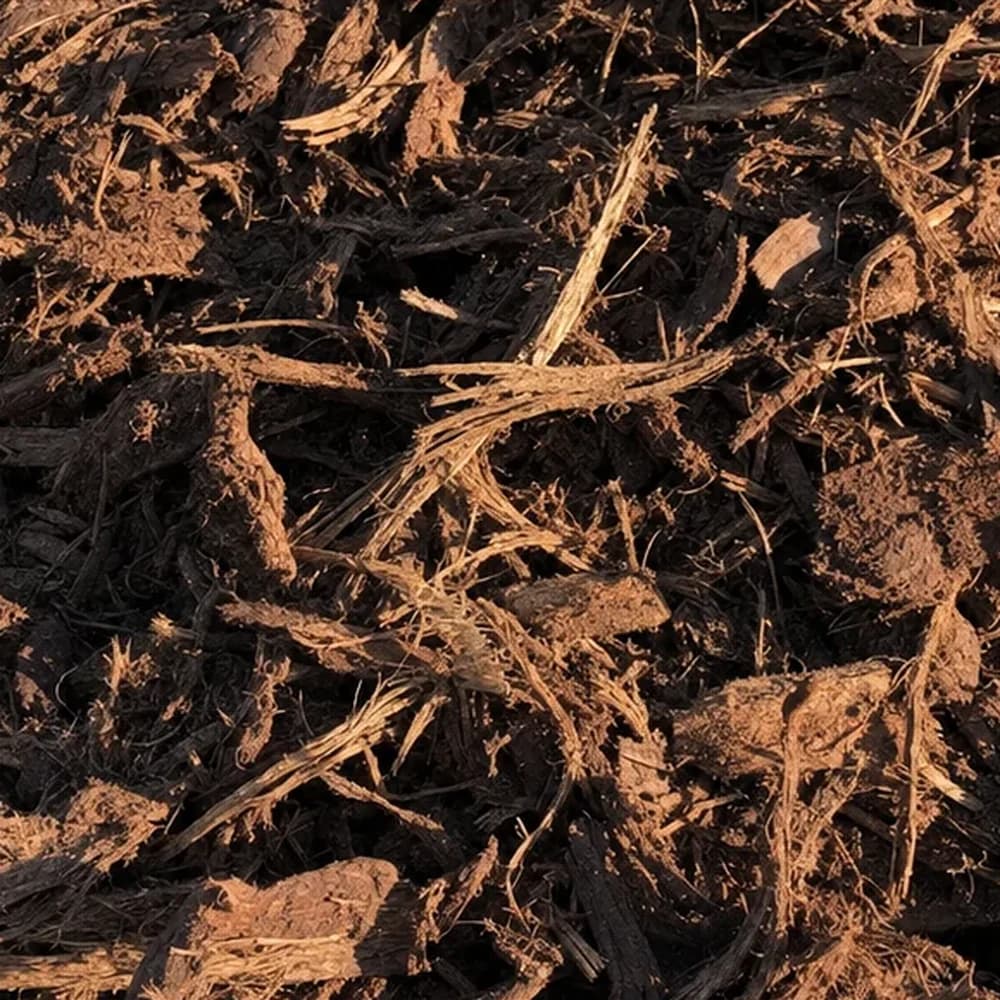
Shredded material mats together and holds its position on a mild slope, which is the reason this tool is set for it. Chips and nuggets last longer before they break down, but a hard afternoon storm will float them and leave them in the grass. Dyed material holds color longer. Every type uses the same volume arithmetic, so the choice changes how the bed looks and how often you redo it, not how many yards you order.
If what the bed actually needs is body rather than cover, mulch is the wrong line. Sandy ground that holds neither water nor nutrients wants Garden Soil worked in first, sized on the soil calculator, with the mulch going over the top afterwards. Thin ground that needs building up before sod goes down wants Top Soil from the topsoil calculator instead, and you can browse the rest of the catalogue if the bed turns out to need stone rather than either. Otherwise, take the yardage from here, open the product page to pick a quantity and a delivery date, and lay a tarp where the pile is going.
Common questions
My front bed wraps around the corner of the house in an L. Do I need two calculations?
Not two separate ones. Switch to Multiple areas and enter each leg of the L as its own rectangle, stopping the first where the second begins so the corner is not counted twice. One depth covers both, and the total comes back as a single yardage and bag count.
Do I measure to the edge of the bed or to the inside of the border?
Measure the surface you intend to cover. With a hard border already set, that is the inside face of it. With a spade-cut edge, measure to the bottom of the cut, because the material will fall into the trench and you want it accounted for.
The bed sits on a slope down to the swale. Does that change the yardage?
Slightly. Run the tape along the face of the slope rather than across it on the level, which adds a little area. The bigger adjustment is behavior, not arithmetic: on anything more than a gentle fall, use shredded material rather than nuggets and keep the depth at the lower end, because a heavy rain will carry a deep loose layer into the grass.
There is old mulch in the bed already. What depth do I enter?
Rake the old layer loose and measure what is left. If it is under two inches and not matted, enter only the difference that brings the total to two or three inches. If it has crusted over or grown a fungal mat, pull it out and enter a full three inches over bare ground.
Half my beds are round tree rings and half are long borders. Can I total them all?
Yes, up to five pieces at a time. Do the round ones in Circle mode by diameter, the borders in Rectangle mode by length and average width, and if you have more than five, run the tool twice and add the two yardages together before you order.
Related calculators
Skip the 27-bag cart.
Bulk shredded hardwood by the yard, tipped in your driveway, delivery free.