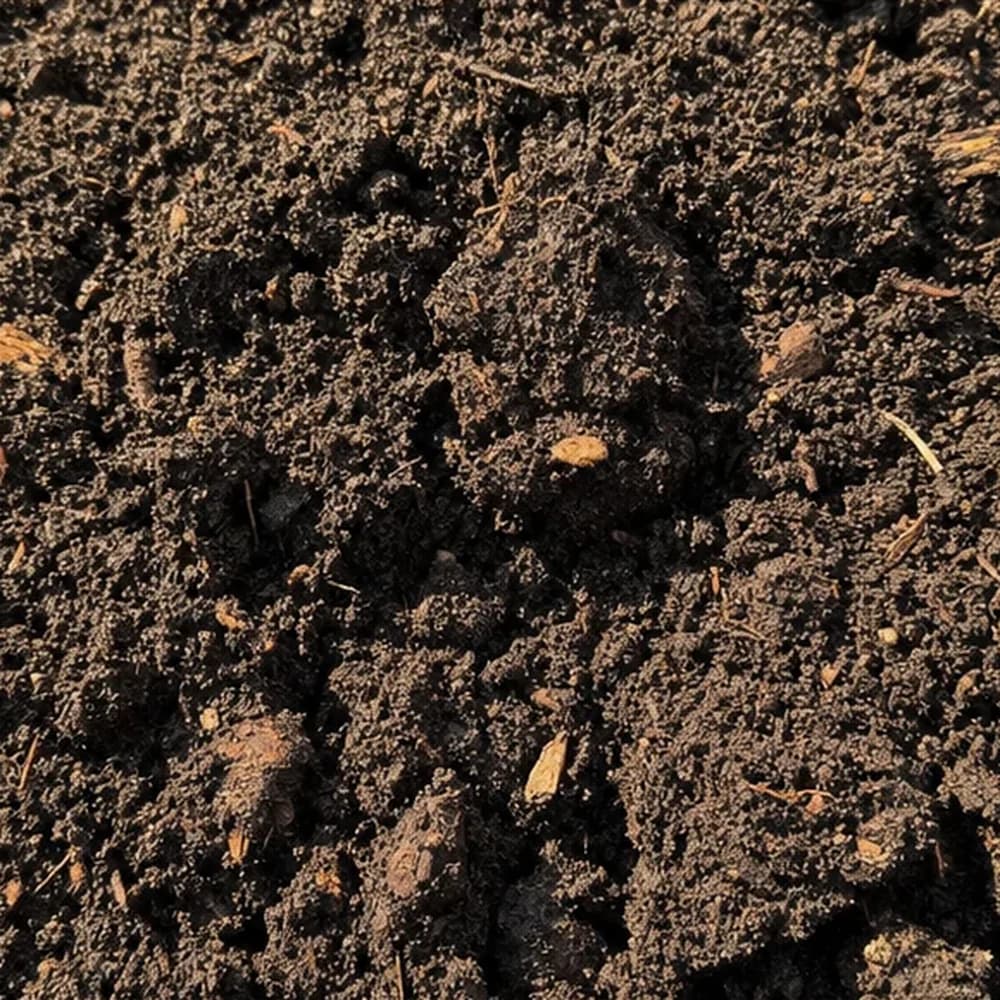
Top Soil for Florida Lawns and Beds
Top Soil helps Florida lawns, gardens, and flower beds get a clean, workable growing surface after heavy seasonal rain.
- Size: Screened; free of rocks, debris and large clumps
- Grading: Balanced sand, silt and clay
From $434 for 1 ton, delivery included (larger loads cost significantly less per ton)
Free delivery included
Free delivery anywhere in Florida
Pick a delivery date
Weekday delivery, earliest Oct 30
“Needed top soil for a yard project and ordered from Florida Rock Supply. Delivery showed up as planned, and the driver put it right where I asked. Price was fair too, definitely felt like good value.”
Bill B. · Verified Buyer
Get a Free Quote
Fill out the form and our sales team will get back to you within the hour.
Size and Grading
- Size
- Screened; free of rocks, debris and large clumps
- Grading
- Balanced sand, silt and clay
Soil work here is decided by the calendar more than the shovel. Drop four yards of top soil on a bare lot in August, and the first afternoon storm moves half of it before anything is planted into it. The dry season, roughly November through April in the south of the state and the gaps between fronts further north, is the easy window: the ground is workable, sod roots without drowning, and a fresh layer stays where it was raked. Top Soil is sold screened and free of rocks, debris and large clumps, graded as a balanced sand, silt and clay blend, which is what makes it spreadable in thin, even layers.
Top soil, garden soil and fill dirt are not interchangeable on a sand lot
Three products, three jobs, and ordering the wrong one is the usual cause of a regrade that has to be done twice.
| Product | What it is for | What it is not for |
|---|---|---|
| Top Soil | The top few inches that grass and shallow roots live in, and light regrading | Filling anything deep. It is too good, and too expensive per yard, to bury. |
| Garden Soil | Raised beds and planting holes where native sand holds almost no water or nutrients | Spreading under sod across a whole yard |
| Fill Dirt | Raising low or wet ground and building up a pad before base rock | Growing anything. Nothing is expected to root in it. |
On a low lot, the sequence is fill dirt for the bulk, then top soil for the last few inches. Reverse it and you have paid for a growing medium sitting three feet below where roots will ever reach.
Where a screened blend actually pays on Florida ground
Native peninsula sand drains in minutes and holds almost nothing, which is why a lawn on it browns four days into a dry spell. A screened blend with silt and clay in it changes the top layer's ability to hold water between storms without going anaerobic in the wet season. Under new sod that means even rooting; on tired turf, a thin topdressing raked into the surface fills the low spots that puddle and gives seed somewhere to sit.
It also has a plain construction use: finishing the disturbed ground around something you have just built, so the site drains away from it and grass will come back.
That last case is more common than people expect. Any build that involved a machine leaves compacted tracks, a spoil ridge and a few scraped patches where nothing will grow, and those are the spots where water collects and then finds its way toward whatever you just put in. A few inches of screened soil, raked to a consistent fall away from the structure and seeded or sodded, does two jobs at once: it hides the damage and it sends the next storm somewhere harmless. Doing it in the same week as the build is also easier than doing it a year later, when the compacted ground has set hard and wants ripping before anything will take.
Two inches, four inches, or a graded fill: setting the depth
For topdressing an existing lawn, half an inch to an inch, worked in with the back of a rake so the grass is not smothered. For sod on prepared ground, two to four inches. For a bed you are planting into directly, four to six inches. For a shallow regrade around a structure, whatever makes the fall work, usually two to three inches over a broad area rather than a mound in one spot.
Three hypothetical examples, all finishing the ground around jobs that have just gone in:
- A verge either side of a single-car gravel driveway, two strips 3 ft by 60 ft at 3 inches. 2 x 3 x 60 = 360 sq ft. 360 x 0.25 = 90 cubic feet. 90 / 27 = about 3.3 cubic yards.
- A four-foot grass apron around a 24 ft by 30 ft pole barn pad, at 3 inches. Outer 32 x 38 = 1,216 sq ft, less the 720 sq ft pad = 496 sq ft. 496 x 0.25 = 124 cubic feet. 124 / 27 = about 4.6 cubic yards.
- Planting shoulders along a flagstone walkway, two strips 2 ft by 30 ft at 2 inches. 2 x 2 x 30 = 120 sq ft. 120 x (2/12) = 20 cubic feet. 20 / 27 = about 0.75 cubic yards.
Soil settles, so keep the five percent extra the topsoil calculator adds by default rather than coming up short halfway across a strip. This site publishes screened topsoil at about 2,200 lb per cubic yard, roughly 1.10 tons per yard, so the verges are approximately 3.6 tons (3.3 x 1.10), the barn apron about 5.1 tons (4.6 x 1.10) and the planting shoulders about 0.8 tons (0.75 x 1.10). The topsoil calculator converts the cubic yards into the tonnage the order is placed in.
Booking a dry window and a spot the truck can tip
Order against the forecast. A load tipped onto a tarp or a driveway with a couple of dry days behind it spreads easily; the same load after a week of storms is heavy, sticky and slow to move with a wheelbarrow. Delivery is arranged at checkout by ZIP code, and the truck needs clear access to somewhere it can tip, ideally on a hard surface near where the soil is going rather than across the lawn you are about to repair.
Pick a date and a quantity on this page once you have a number, and have the ground stripped, killed off or scarified before the load lands, so the soil goes straight down instead of sitting in a heap.
Quickly Calculate How Much You Need
Material: Top Soil
How to Measure
Measure the length and width of your project area in feet
Decide on depth in inches (2" for landscaping, 4" for driveways)
Enter the values above and we'll calculate the tonnage you need
Need help figuring out the right amount? We can help!
Call or text us at (813) 896-2664 and we'll help you calculate the right quantity for your project.
Not sure how much you need? The Topsoil Calculator has depth guides, coverage charts and worked examples for this material.
Frequently Asked Questions About Top Soil
Customer Reviews
Needed top soil for a yard project and ordered from Florida Rock Supply. Delivery showed up as planned, and the driver put it right where I asked. Price was fair too, definitely felt like good value.
Bill B. · Fort Lauderdale, FL · Verified Buyer
Got top soil from the team and it showed up with free delivery, which was a nice bonus. They kept me updated the whole time and the communication was really good.
Kelly M. · Orlando, FL · Verified Buyer
Picked up on a recommendation and ordered top soil from this company, and I'm really happy with how it turned out. Pricing was fair, delivery was easy, and I'd definitely use them again.
Rachel B. · Miami, FL · Verified Buyer
Went with these guys for top soil and I'm really happy with how it turned out. The driver was friendly and careful about placement, I'd definitely order again and recommend them.
Mark C. · Tampa, FL · Verified Buyer
Top Soil has 4 verified customer reviews with an average rating of 5 out of 5.