Topsoil Calculator: The Growing Layer, Not the Bed Blend
Enter your project dimensions
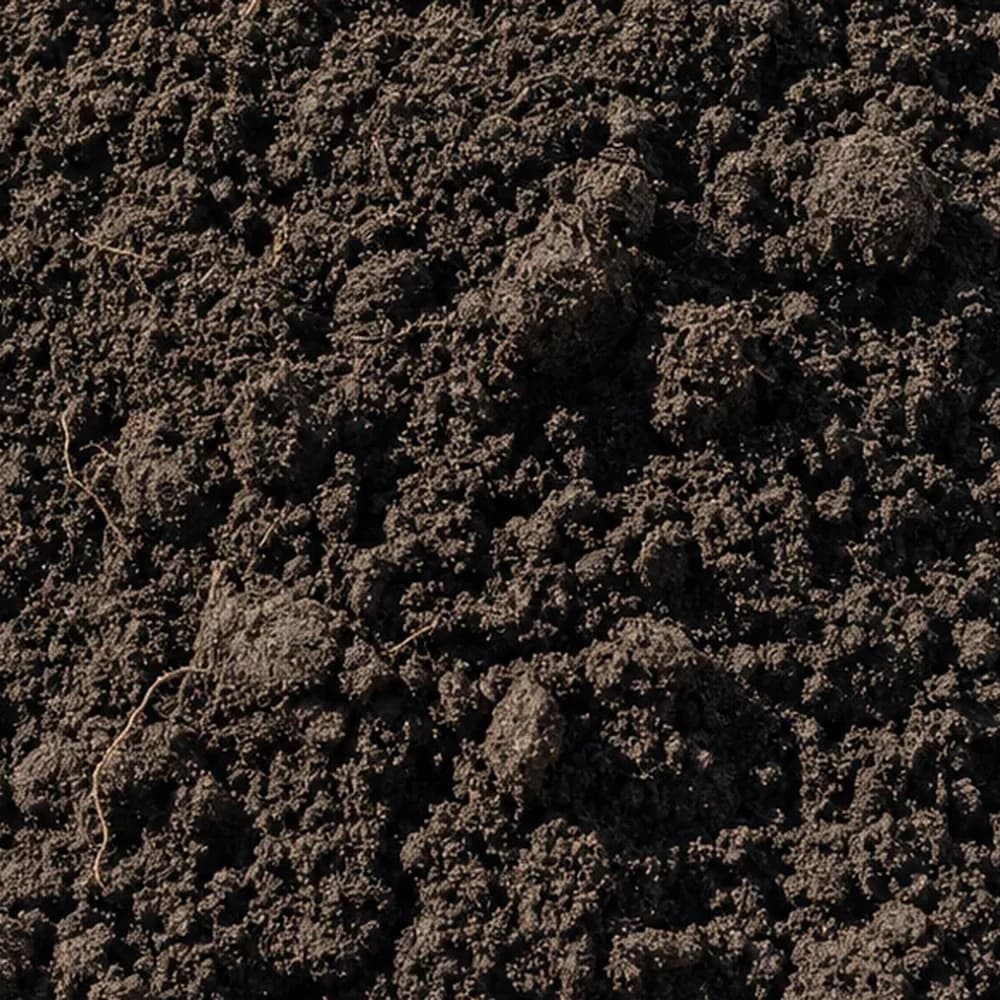
Screened topsoil and a compost blend get bought interchangeably and they should not be. This topsoil calculator sizes the growing layer that goes under grass: natural upper soil with the stones, roots and clods screened out, laid over a loosened subgrade so sod or seed has something to root into. The blend with compost through it belongs in a raised bed, where it is being planted rather than mown, and it is sized on the soil calculator as Garden Soil. Getting that wrong is how people end up spreading bed mix across a lawn or sodding onto material that will not knit to the sand beneath it.
Booking the load for a dry week between afternoon storms
Lawn work runs year round here, but the week you take delivery decides how the job goes. A pile that sits through a run of afternoon storms goes heavy on the shovel and smears rather than rakes, and soil spread onto saturated ground seals instead of joining to it. The dry season is the easy window in the south of the state, and further north the gaps between winter fronts do the same job.
So set the delivery for the week you can actually spread, not the week you decide to do the project. If it has to wait, tarp it. The volume does not change when it rains, but everything about handling it does.
Measuring a lawn cut up by a drive, a swale and three palms
Very few lawns are one rectangle. Take the front as one piece and the side strip as another, leave out the drive, the walk and the beds, and ignore small obstacles: three palms and a mailbox post are not worth subtracting, and the few square feet they occupy are a useful margin.
The one thing worth measuring properly is the swale. If a drainage swale crosses the lawn, it is holding its shape for a reason, and filling it flat with topsoil moves water somewhere it was not going before. Measure around it and leave it alone.
Four areas, one depth, and what the topsoil calculator does with them
Rectangle takes a length and a width in feet, circle takes a single diameter for a round bed or a tree ring, and multiple areas totals up to five pieces in one calculation. All areas in a run share one depth, so a new lawn at 4 inches and a topdressing pass at a half inch are two separate runs.
The depth field takes inches, from a quarter inch up to 24. That quarter-inch floor is the reason a topdressing job can be sized here at all: a half inch across a big lawn is a real order, and rounding it to a whole inch would double it.
The material line sets the weight behind the tons reading, the checkbox adds an optional 5 percent for compaction and spillage, and the panel returns cubic yards, tons and cubic feet at once, with a button that emails the figure to you.
Depths worth knowing before you type: a quarter to a half inch for topdressing over living grass, a half to an inch for an overseeding prep, 4 to 6 inches over a loosened subgrade for a new seeded or sodded lawn, and about 6 inches for a flower bed blended into the soil beneath it.
2,200 pounds a yard, and why the order is still written in yards
Cubic feet is the area in square feet times the depth in inches, divided by 12. Cubic yards divides that by 27, and that is the unit topsoil is sold and hauled in. Tons applies the published weight, which for screened topsoil is about 2,200 lb a cubic yard, or 1.10 tons.
Both numbers describe the same pile. The yardage is what you order against, because the material is sold by volume and the area it covers depends on volume rather than weight. The tonnage tells you what is arriving on the truck and how much of an afternoon you are committing to with a wheelbarrow. It also explains why the same 4 inches comes back lighter here than it did on the fill dirt page: fill is published at about 2,400 lb a yard, and a compost blend lighter again at roughly 2,000.
Sodding 1,720 square feet, and a half-inch pass over thin grass
Hypothetical lawns, both worked longhand.
The back lawn is going to sod and measures 1,720 square feet, taking 4 inches over a subgrade that has been loosened an inch. 1,720 x 4 = 6,880, divided by 12 is 573.33 cubic feet, divided by 27 gives 21.23 cubic yards. At 1.10 tons to the yard, that is 23.36 tons. With the 5 percent ticked, about 22.30 yards and 24.53 tons.
The front lawn is thin rather than bare and takes a half-inch topdressing across 2,750 square feet. 2,750 x 0.5 = 1,375, divided by 12 is 114.58 cubic feet, divided by 27 is 4.24 cubic yards, or 4.67 tons. With the allowance, 4.46 yards and 4.90 tons.
Same property, same afternoon, and one job is five times the other. Keep a topdressing pass thin enough that the grass blades stay proud of the soil, or you are smothering the lawn you meant to feed.
The extra yard the tape did not ask for, and where it ends up
A lawn is never as flat as the tape assumes. Low corners, the dip where a trench was backfilled and the line along a drive apron all take more than their share, and the last part of a lawn to get covered is usually where the shortfall shows. Order to the upper end of your figure.
Loosen the subgrade by at least an inch before the soil goes down. On sand that is what lets the new layer knit into the old ground instead of sitting on a smeared surface, and it is the difference between a lawn that roots and one that dries out in a week. Set the finished grade so water runs away from the house across the first stretch of lawn. Settle the soil gently with water rather than packing it: a footprint in properly settled topsoil should press in about half an inch.
Take the yardage to Top Soil, set a quantity and a delivery date, and point the driver at firm ground within wheelbarrow distance. If the lawn needs to come up in level before it can grow anything, size that layer on the dirt calculator and order Fill Dirt as its own line.
Common questions
The low side of the yard has to come up nearly a foot before sod. How do I split that order?
Two products, two runs. Bring the level up with fill dirt to within four to six inches of your finished grade, sized on the dirt page, then run this page across the same footprint at that final four to six inches for the topsoil. Ordering the whole foot in topsoil buys a growing layer nothing will ever root into.
The front lawn is a curve around the drive with no square corner anywhere. What do I enter?
Straighten it in your head. Take an average length and an average width for the main shape, then add the bulges as extra rectangles under Multiple areas. Being a little over on a lawn is harmless, because the surplus goes into the low corners.
The lawn is fine except for the ruts where the trailer sat. How do I size just those?
Measure the ruts, not the lawn. Enter their footprint under Multiple areas and use the average depth of the hollow as the depth, measured with a straightedge laid across them. Scratch the surface up before filling so the patch knits in rather than sitting as a plate.
I finished a yard short with the sod already on the trailer. What then?
Spread what you have across the areas the sod is going down on first and leave the last strip bare, rather than thinning the whole lawn to make it stretch. Sod laid on two inches where it needed four struggles through its first dry spell. A small top-up is the better outcome.
How much can the figure drift on ground that is not level?
The arithmetic does not drift at all; your depth reading does. On a lawn that rises and falls, take readings at several points with a string line and average them rather than measuring one spot. That single habit accounts for most of the gap between what a page like this says and what a yard actually swallows.
Related calculators
Lawn math done? Soil's on us to deliver.
Screened topsoil by the cubic yard, free delivery across Florida.