Fill Dirt for Raising Low Florida Ground
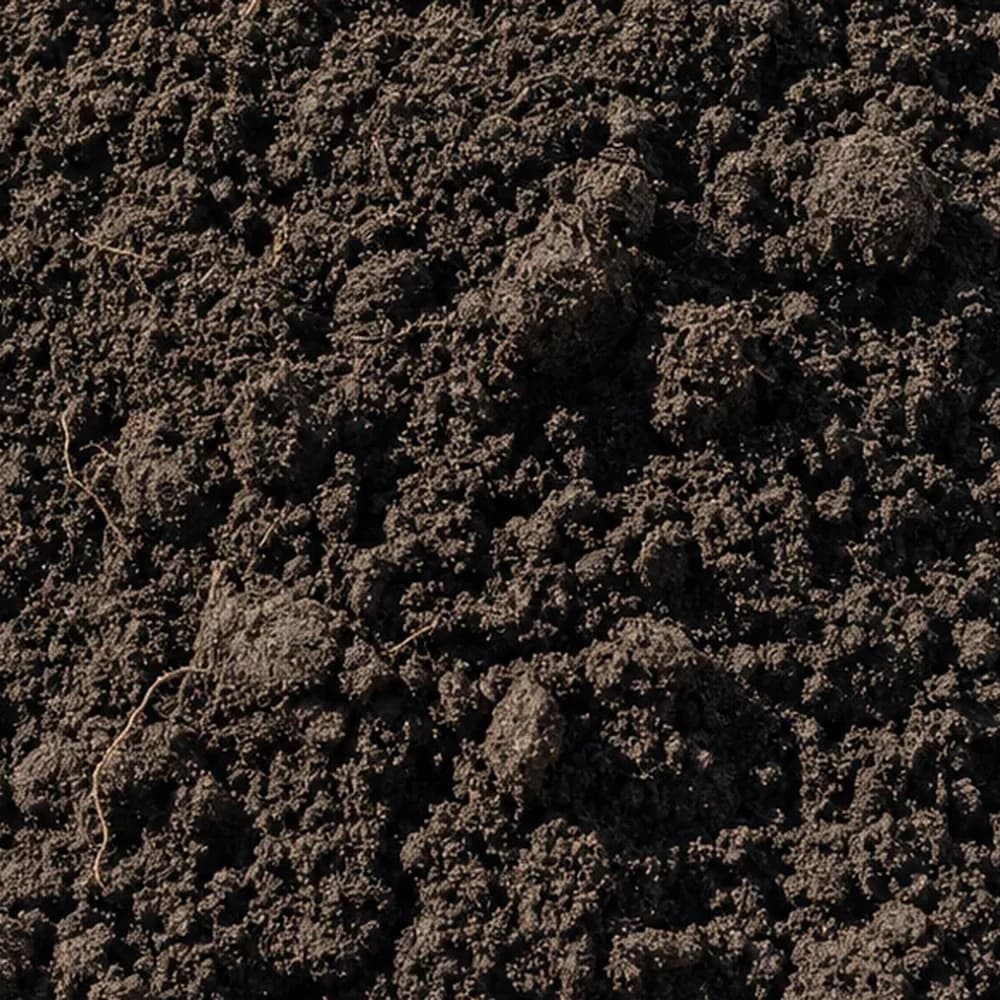
For Florida paver bases that need a raised, stable rough grade, Fill Dirt provides clean, compactable material for site preparation and backfill.
- Size: Screened to remove large rocks, roots and debris
- Grading: Minimal organic matter
From $289 for 1 ton, delivery included (larger loads cost significantly less per ton)
Free delivery included
Free delivery anywhere in Florida
Pick a delivery date
Weekday delivery, earliest Oct 30
“Picked up on how easy these guys made ordering fill dirt, and they kept me updated the whole time. Really happy with the delivery and communication, would use them again.”
Diane R. · Verified Buyer
Get a Free Quote
Fill out the form and our sales team will get back to you within the hour.
Size and Grading
- Size
- Screened to remove large rocks, roots and debris
- Grading
- Minimal organic matter
The usual mix-up is with top soil, and the way to keep the two straight is to remember that fill dirt is bought precisely because nothing will grow in it. It is screened to take out large rocks, roots and debris, and graded for minimal organic matter. On a low, flat Florida lot where a summer storm leaves standing water for days, that is the material you want under everything: it builds the shape of the ground without carrying anything inside it that will rot away and drop the grade two years later.
Nothing grows in it, and that is the specification
Organic matter is the dividing line. Top soil carries it on purpose, because roots need it. Fill dirt is held to a minimum of it, because decaying plant material breaks down, loses volume and takes the level down with it. A grade built on organics is a grade that settles unevenly, and unevenly is worse than a lot, because it cracks what sits above.
So the two products are not grades of the same thing. Top Soil is a growing medium and it goes on last, in a thin layer, where planting happens. Fill dirt is a structural earthwork material and it goes on first, in depth, wherever the level needs to come up.
The low back corner that holds water for a week
The job this is ordered for most on sandy and flatwoods ground is a low area that will not drain. Rain comes off a roof, off a drive and off the neighboring grade, arrives at the lowest point, and then waits, because flatwoods sand often sits over a hardpan layer and a high water table leaves nowhere for it to go downward. The grass thins, the ground stays soft, and mosquitoes find it.
Raising that corner and shaping a fall toward somewhere the water can legitimately go is the fix. The same material does the same work under a shed pad that needs lifting out of a wet spot, along a foundation where the grade has slumped and water now runs toward the wall, and across a lot where a whole rough contour has to be established before any hard surface gets built.
How a mineral fill behaves on Florida ground
On deep sand, fill dirt gives you something the native ground does not: a material with enough body to hold a shaped slope. Sand will not hold a bank at any useful angle, which is why a regrade in pure sand tends to spread flat again after a season of storms.
On muck or peat ground the calculation changes. Those soils are soft and lose volume as they dry, so fill placed on them keeps settling as the material beneath it shrinks. Expect to come back and top up, and get advice before building anything structural on that sequence.
Where the water table is close to the surface, raising the grade is often more useful than digging deeper, since an excavation on a low lot fills with water and does nothing for you. Build up rather than down, and shape the drainage route before you place a single load.
Lifts, moisture and a plate between afternoon storms
Fill placed in one deep dump and pushed level is fill that will settle. It goes in layers.
Spread it in lifts of six to eight inches, compact each lift across its whole area before the next goes on, and keep the material at working moisture. Too dry and the particles will not knit; too wet, which in the rainy season is most of the time by three o'clock, and a compactor just kneads it. The practical answer between late May and October is to work the mornings and cover the open grade if a storm is coming.
Shape the finished fall as you build, not at the end. A quarter of an inch per foot away from a structure is a reasonable working slope, and it is far easier to build that in lift by lift than to carve it into a finished pad.
Settling, the first wet season, and what caps it
Even well compacted fill moves a little in its first year, and a Florida rainy season is the test. Walk the area after the first heavy week and look for dishing at the edges of the fill and along any trench line that crosses it. Top up those spots before they hold water, because a dip that ponds gets worse every storm.
Then cap it for the surface it has to become. Grass and planting want a layer of top soil over the fill, since nothing will establish in the fill itself. A drive, a pad or a patio wants a compacted course of Limerock Base on top of the fill and the finish built over that. The fill is never the finished surface.
Tons to bring a 16 by 20 patio area up eight inches
The dirt calculator takes length and width in feet and depth in inches, handles rectangles, circles and up to five areas, and adds ten percent by default. It works (L x W x D/12) / 27 = cubic yards and applies density for tons. Dry fill dirt is published here at about 2,400 lb per cubic yard, which is 1.20 tons per yard, and wet material can run up to 3,000 lb per yard, or 1.50 tons. Two hypothetical jobs:
- Raising a 16 ft by 20 ft patio area by 8 inches of rough grade before the base goes in. 16 x 20 = 320 sq ft. 320 x (8/12) = 213.3 cubic feet. 213.3 / 27 = 7.9 cubic yards. At 1.20 tons per yard that is about 9.5 tons dry, and as much as 11.9 tons if the load comes in wet after a storm.
- A 22 ft by 30 ft low corner raised 6 inches. 22 x 30 = 660 sq ft. 660 x 0.5 = 330 cubic feet. 330 / 27 = 12.2 cubic yards, or roughly 14.7 tons dry.
Both figures are placed volume. Compacting in lifts loses something like fifteen percent of the loose volume, so the first job is closer to 9.1 cubic yards ordered and the second closer to 14 if you want to finish at the line rather than an inch under it. Check your own numbers on the dirt calculator, then pick a quantity and a delivery date here. Delivery is arranged at checkout by ZIP code and the truck needs firm access and a clear spot to tip.
Two jobs people order fill dirt for that want stone instead
A dry creek bed is a stone feature, not an earthwork. The channel gets shaped, then lined, and the lining is what takes the water: Large River Rock through the channel with smaller stone at the margins. Fill dirt in a channel washes out in the first storm that uses it.
A fire pit surround is the same story at a smaller scale. That ring wants a firm, non-combustible, free-draining surface, which means Stone Screenings or a decorative gravel over a compacted base. Bare fill around a pit turns to a puddle in the wet season and a dust ring in the dry one.
Quickly Calculate How Much You Need
Material: Fill Dirt
How to Measure
Measure the length and width of your project area in feet
Decide on depth in inches (2" for landscaping, 4" for driveways)
Enter the values above and we'll calculate the tonnage you need
Need help figuring out the right amount? We can help!
Call or text us at (813) 896-2664 and we'll help you calculate the right quantity for your project.
Not sure how much you need? The Dirt Calculator has depth guides, coverage charts and worked examples for this material.
Frequently Asked Questions About Fill Dirt
Customer Reviews
Great Experience
My order with Florida Rock Supply was simple and straightforward. I got the result I wanted with the fill dirt. The service was friendly, helpful, and easy to work with.
Sandra W. · Cape Coral, FL · Verified Buyer
Ordered fill dirt from the team and it showed up right when they said it would. Free delivery was a big plus and saved me a hassle. I'd definitely use them again.
Bill R. · St. Petersburg, FL · Verified Buyer
Got fill dirt delivered by these guys and everything went smooth. Price was fair, and I'd definitely use them again.
Wendy M. · Tampa, FL · Verified Buyer
Picked up on how easy these guys made ordering fill dirt, and they kept me updated the whole time. Really happy with the delivery and communication, would use them again.
Diane R. · Miami, FL · Verified Buyer
Fill Dirt has 4 verified customer reviews with an average rating of 5 out of 5.