Crusher Run for Florida Pads and Drives
For Florida paver bases and driveway work, Crusher Run compacts into a firm layer where sandy ground needs added support.
- Size: 3/4 inch minus
- Grading: Crushed stone blended with stone dust and fine particles
- Type: Angular crushed stone
From $438 for 1 ton, delivery included (larger loads cost significantly less per ton)
Free delivery included
Free delivery anywhere in Florida
Pick a delivery date
Weekday delivery, earliest Oct 30
“Went with Shell Rock from this company and I'm really happy with how it turned out.”
Rachel E. · Verified Buyer
Get a Free Quote
Fill out the form and our sales team will get back to you within the hour.
Size and Grading
- Size
- 3/4 inch minus
- Grading
- Crushed stone blended with stone dust and fine particles
- Type
- Angular crushed stone
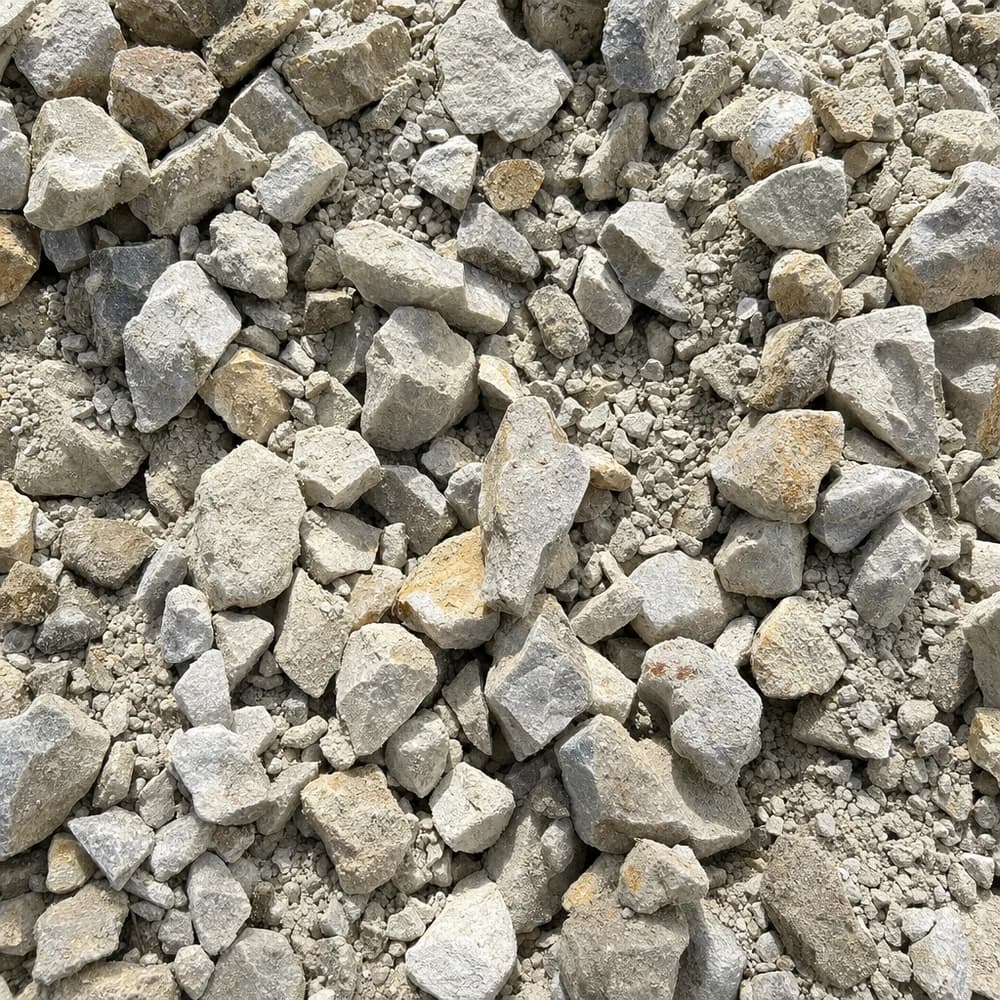
The order that comes in most often is a repair order. Someone spread clean stone over sand, drove on it for a season, and now the stone has sunk out of sight and the ruts are back. Clean stone has no fines in it, so it never binds, and on loose peninsula sand there is nothing below it to stop the stones being pushed apart. Crusher run is what gets bought to put that right: 3/4 inch minus, crushed stone blended with stone dust and fine particles, an angular crushed stone that packs rather than rolls.
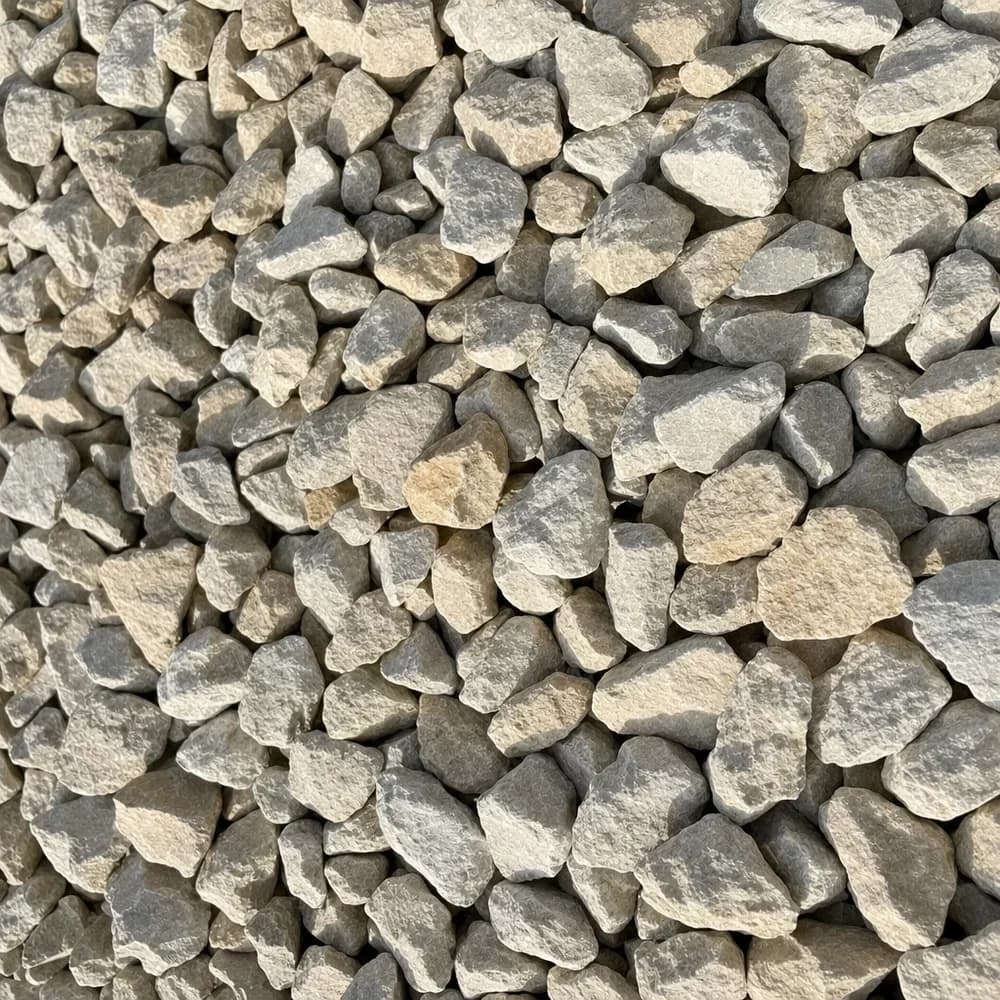
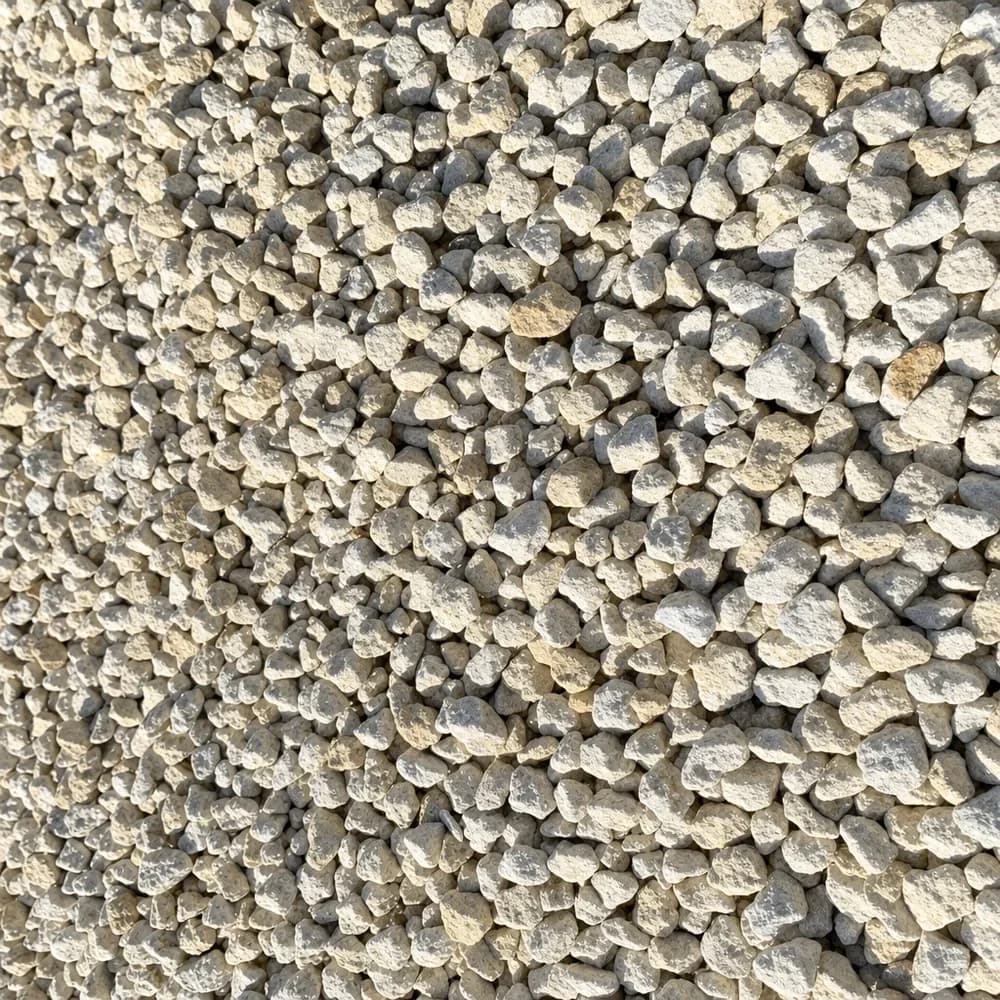
Crusher run, limerock base and #57 on the same sand lot
Three materials in the catalogue look similar in a photograph and behave nothing alike once the roller goes over them.
| Material | Size | What it does under load |
|---|---|---|
| Crusher Run | 3/4 inch minus with stone dust | Binds into a dense, cohesive layer. Sheds water off the surface rather than through it. |
| Limerock Base | 1 inch minus, graded with binding fines | Coarser top size, the standard Florida base rock for drives, pads and private roads. |
| #57 Limestone | 3/16 inch to 1 inch, no fines | Stays open. Water runs straight through it. Will not compact into a load-bearing layer. |
So the choice is not really between three base materials. It is between two compacting mixes and one drainage stone. If water has to pass through the layer, #57 Limestone is the answer and crusher run is the wrong buy. If the layer has to hold something up, it is one of the other two, and the smaller top size of crusher run gives a slightly tighter finish under pavers and flagstone while limerock is the traditional pick under a drive.
A note on naming, because it costs people money. In Southwest Florida buyers often ask for shell rock, meaning a compacting mix rather than a clean stone. Order against the spec on the page rather than a regional nickname, and check the size and grading line before you commit to a quantity.
Jobs the 3/4 inch minus mix earns around a Florida property
It belongs under things, not on top of them. A pole barn or equipment pad is the clearest case: the loads are concentrated under tires and jack stands, the ground is sand, and a bound layer spreads that weight instead of letting it punch through. A gravel drive wants it as the subbase with a surface course above. Pavers, flagstone and a shed floor want it as the compacted layer that stops the finished surface moving.
It is a poor choice anywhere water needs to move down through the layer, so keep it out of French drains, out of trench bottoms around a foundation and out of a downspout run. The stone dust that makes it bind is exactly what clogs a drainage bed.
The other job it does well on a sandy property is a working surface that has to survive traffic before anything permanent goes in: the entrance a concrete truck uses, the strip a trailer gets parked on every weekend, the turn-around at the end of a lane. Those are all places where sand ruts and where a bound layer holds its shape. Because it sheds water off the top rather than through it, give any such area a slight crown or a consistent fall so a summer storm leaves the surface instead of standing on it. A flat, bound pad with no fall is the one arrangement that will puddle.
Compacted inches, not loose inches, when you set the depth
Depth is quoted compacted, and the material loses height under the roller, so a finished four inches means spreading and rolling more than four inches of loose material. Work in lifts of three inches or so, damp, with a pass of the plate or roller on each. Saturated crusher run will pump under the machine instead of tightening; on flatwoods ground during the wet season, that is the thing to watch.
Three hypothetical examples, worked at sensible depths:
- Pole barn pad, 24 ft by 30 ft at 6 inches. 24 x 30 = 720 sq ft. 720 x 0.5 = 360 cubic feet. 360 / 27 = about 13.3 cubic yards.
- Single-car gravel driveway, 10 ft by 60 ft at 4 inches of subbase. 10 x 60 = 600 sq ft. 600 x (4/12) = 200 cubic feet. 200 / 27 = about 7.4 cubic yards.
- Flagstone walkway, 3 ft by 30 ft at 4 inches. 3 x 30 = 90 sq ft. 90 x (4/12) = 30 cubic feet. 30 / 27 = about 1.1 cubic yards.
Those are loose volumes, which is what you order. At this site's published figure for crusher run and road base, about 3,000 lb per cubic yard or roughly 1.50 tons per yard, that is approximately 20 tons for the pole barn pad (13.3 x 1.50), 11.1 tons for the driveway subbase (7.4 x 1.50) and 1.7 tons for the walkway (1.1 x 1.50). The ten percent extra the crusher run calculator adds by default covers the cut lines and the corner you measured optimistically. Tonnage comes from the crusher run calculator, which applies the density held for this material to the cubic yards.
Picking a tip spot a tandem can reach in the wet season
Delivery is arranged at checkout by ZIP code, and the truck needs clear access to a place it can dump. On a sandy lot that is worth thinking about before the date is booked: a loaded truck on a soft verge after three days of afternoon storms is how driveways get ruined. Pick firm ground, check the overhead for branches and a service drop, and mark the spot.
Choose the date and the quantity on this page once the calculator has given you a tonnage. If the area is an odd shape, split it into rectangles, run them as separate areas in the tool, and add the results.
Quickly Calculate How Much You Need
Material: Crusher Run
How to Measure
Measure the length and width of your project area in feet
Decide on depth in inches (2" for landscaping, 4" for driveways)
Enter the values above and we'll calculate the tonnage you need
Need help figuring out the right amount? We can help!
Call or text us at (813) 896-2664 and we'll help you calculate the right quantity for your project.
Not sure how much you need? The Crusher Run Calculator has depth guides, coverage charts and worked examples for this material.
Frequently Asked Questions About Crusher Run
Customer Reviews
The driver was friendly and really careful about placing it right where I needed.
Pat L. · Jacksonville, FL · Verified Buyer
Ordered Shell Rock from this company and it was exactly what I needed. I'd definitely order again and recommend them.
Debbie K. · Miami, FL · Verified Buyer
Had Shell Rock delivered by them and everything went really smooth. They kept me updated the whole time and were easy to talk to. Pricing felt fair too, definitely a good value.
Susan F. · Miami, FL · Verified Buyer
Went with Shell Rock from this company and I'm really happy with how it turned out.
Rachel E. · Miami, FL · Verified Buyer
Crusher Run has 4 verified customer reviews with an average rating of 5 out of 5.