Mason Sand for Florida Finish Work
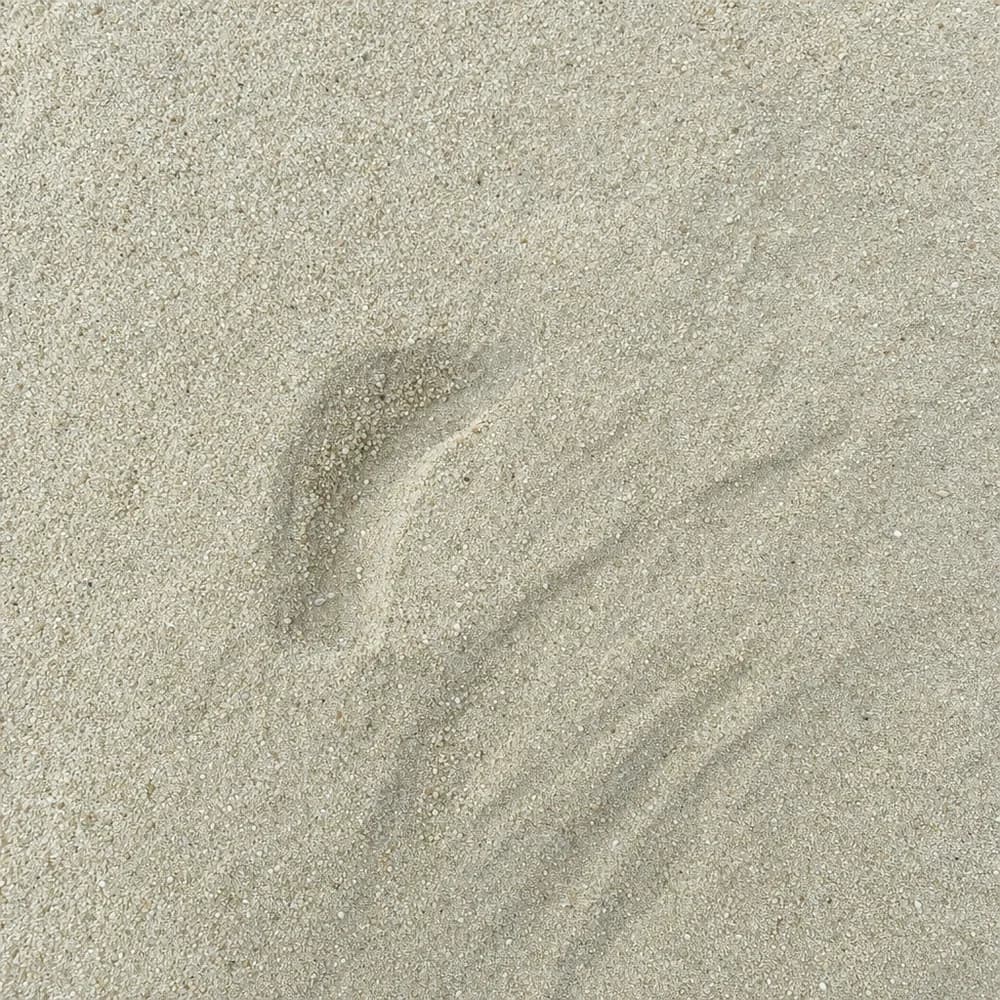
A common Florida mistake is using Mason Sand where a structural base belongs. Its washed, smooth texture suits mortar, paver finishing, and play areas.
- Size: Ultra-fine, consistent grain size
- Grading: Washed to remove clay, silt and organic impurities
From $531 for 1 ton, delivery included (larger loads cost significantly less per ton)
Free delivery included
Free delivery anywhere in Florida
Pick a delivery date
Weekday delivery, earliest Oct 30
“Had mason sand delivered by these guys and everything went smooth. Driver was friendly and careful about where he placed it, really happy with the whole thing.”
Brian E. · Verified Buyer
Get a Free Quote
Fill out the form and our sales team will get back to you within the hour.
Size and Grading
- Size
- Ultra-fine, consistent grain size
- Grading
- Washed to remove clay, silt and organic impurities
The question in front of most people on this page is not what mason sand is, it is whether this is the sand their job wants or the one that will quietly sink it. Living on a sand peninsula makes every sand look interchangeable, and it is the one place that instinct is wrong. Mason Sand is ultra-fine with a consistent grain size, washed to take out clay, silt and organic matter. That washing and that fineness make it excellent at finishing and useless at supporting.
Choose mason sand for these jobs, and pass on it for these
Choose it when the sand is the last thing that goes in and something sits on it or touches it:
- Mortar, stucco and grout, where the fine aggregate has to mix smooth and spread thin.
- The bedding layer directly under pavers, and the joints swept between them afterwards.
- A sandbox or a volleyball court, where the washing matters because hands and bare feet are in it.
Pass on it when the sand is being asked to carry, hold back or armor something:
- Retaining wall backfill. Fine washed sand behind a wall holds water and pushes on it. That is a job for open stone.
- A pond, lake or canal edge. Wave action and wake take fine sand straight out; the waterline wants heavy stone, not a sand shoulder.
- A construction entrance. That is a rutting problem, and the answer is a coarse angular material that locks, not one that rolls.
Mortar, stucco, paver joints and a sandbox: what the washed grain is for
In a mortar or stucco mix the sand is most of the volume, and the consistency of the grain is what makes a batch spread and bond the same way twice. Clay or organic matter in the sand interferes with that bond, which is why washing is part of the specification rather than a nicety.
Under pavers the fine grain does something different again. A thin, screeded layer lets each unit bed down to its own slight variation in thickness, so the finished surface reads flat under a straightedge. Sweep the same sand into the joints and the units lock against one another instead of walking apart, which matters on a patio that takes a summer storm every afternoon for five months.
In a sandbox or a court, the washing is the whole point. Silt and clay are what make ordinary construction sand stain clothes and clump, and the screening takes out the sharp oversize that makes it unpleasant barefoot.
Bedding course or load path: mason sand only does one of them
This is the distinction the whole page turns on. A patio has two layers below the pavers doing two different jobs. The base course carries the load and is a compacted aggregate, four inches or so for a walkway or patio on prepared ground. The bedding course sits on top of it, is about an inch, and only levels. Ask the bedding layer to do the base course's work and the patio moves; on loose peninsula sand it moves fast.
So the order is subgrade, compacted base, then an inch of mason sand screeded flat, then pavers, then jointing sand. An inch is not a rule of thumb chosen for neatness: thicker bedding sand is compressible, and the units sink unevenly into it under traffic.
Half a yard under a patio, a yard in a sandbox, and a wall backfill to skip
The calculator takes length and width in feet and depth in inches, from a quarter inch upward, which covers a bedding layer that most tools round away. Three hypothetical quantities:
- Paver bedding under a 12 ft by 14 ft patio at 1 inch. 12 x 14 = 168 sq ft. 168 x (1/12) = 14 cubic feet. 14 / 27 = about 0.52 cubic yards. Call it half a yard plus the five percent the sand calculator adds by default.
- A 6 ft by 6 ft sandbox filled 10 inches deep. 6 x 6 = 36 sq ft. 36 x (10/12) = 30 cubic feet. 30 / 27 = about 1.1 cubic yards.
- Backfill behind a 20 ft wall, 18 inches wide and 3 ft tall, would be 20 x 1.5 x 3 = 90 cubic feet, about 3.3 cubic yards. Order open stone for that, not this.
Note how small the patio figure is next to the base course under it: the same 168 sq ft at 4 inches of base works out at 168 x (4/12) = 56 cubic feet, 56 / 27 = about 2.1 cubic yards, four times the sand above it. Sand is the thin finishing layer, and it is worth ordering the two together. This site publishes mason and washed sand at about 2,700 lb per cubic yard, roughly 1.35 tons per yard, so the patio bedding is approximately 0.7 tons (0.52 x 1.35) and the sandbox about 1.5 tons (1.1 x 1.35). The sand calculator converts the cubic yards to tons, and there is a paver sand calculator set up for the bedding layer specifically.
Set the quantity and the delivery date on this page. Delivery is arranged at checkout by ZIP code and the truck needs a clear route to a tip spot. Fine sand blows and washes, so pick somewhere sheltered, have a tarp ready, and cover the pile if a storm is due before you can screed.
Quickly Calculate How Much You Need
Material: Mason Sand
How to Measure
Measure the length and width of your project area in feet
Decide on depth in inches (2" for landscaping, 4" for driveways)
Enter the values above and we'll calculate the tonnage you need
Need help figuring out the right amount? We can help!
Call or text us at (813) 896-2664 and we'll help you calculate the right quantity for your project.
Not sure how much you need? The Sand Calculator has depth guides, coverage charts and worked examples for this material.
Frequently Asked Questions About Mason Sand
Customer Reviews
Went with this company for mason sand and I'm really happy with how it turned out. The driver was friendly and careful about where he placed it, which saved me a lot of extra work. I'd definitely order from them again.
Scott I. · Tampa, FL · Verified Buyer
Got mason sand from this company and the delivery showed up as planned. The mason sand was clean and exactly what I needed, really happy with it.
Heather I. · Jacksonville, FL · Verified Buyer
Grabbed mason sand from these guys and it showed up right when they said it would. The sand was clean, easy to spread, and exactly what I needed. I'd definitely order again and recommend them to anyone needing a delivery.
Tara G. · Jacksonville, FL · Verified Buyer
Had mason sand delivered by these guys and everything went smooth. Driver was friendly and careful about where he placed it, really happy with the whole thing.
Brian E. · Cape Coral, FL · Verified Buyer
Ordered mason sand from this company and it showed up right when I needed it. Free delivery was a huge plus, and I'm really happy with how easy the whole thing was.
Hank E. · Miami, FL · Verified Buyer
Mason Sand has 5 verified customer reviews with an average rating of 5 out of 5.