3/8" Natural Pea Gravel for Florida Yards
In Florida, 3/8" Natural Pea Gravel gives paths, patios, play areas, and drainage zones a smooth, rounded finish that lets water move through.
- Size: Approximately 3/8 inch
- Type: Small, smooth, naturally rounded stones
- Color: Tans, creams, grays, browns and occasional reds
From $739 for 1 ton, delivery included (larger loads cost significantly less per ton)
Free delivery included
Free delivery anywhere in Florida
Pick a delivery date
Weekday delivery, earliest Oct 30
“Decided on natural pea gravel from these guys, and it was just what I ordered. Free delivery was a nice bonus, super happy with how it turned out.”
Karen K. · Verified Buyer
Get a Free Quote
Fill out the form and our sales team will get back to you within the hour.
Size and Grading
- Size
- Approximately 3/8 inch
- Type
- Small, smooth, naturally rounded stones
- Color
- Tans, creams, grays, browns and occasional reds
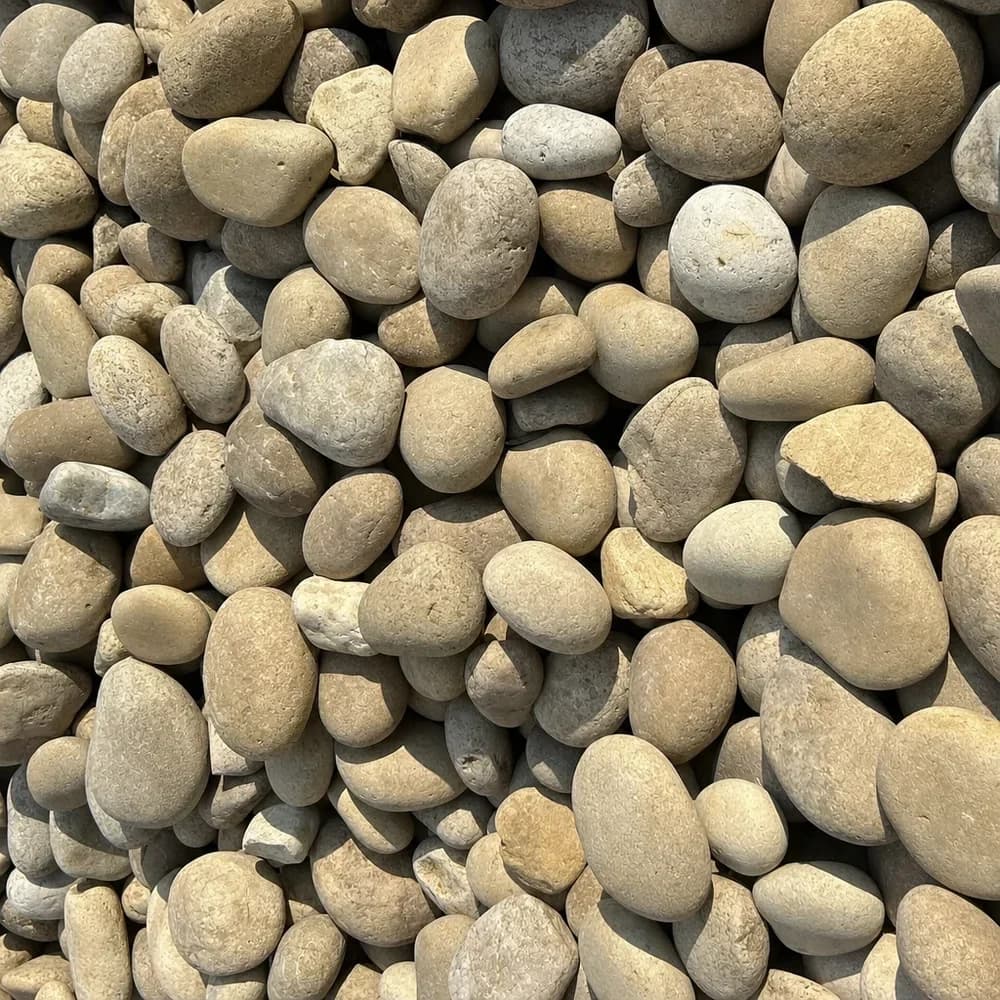
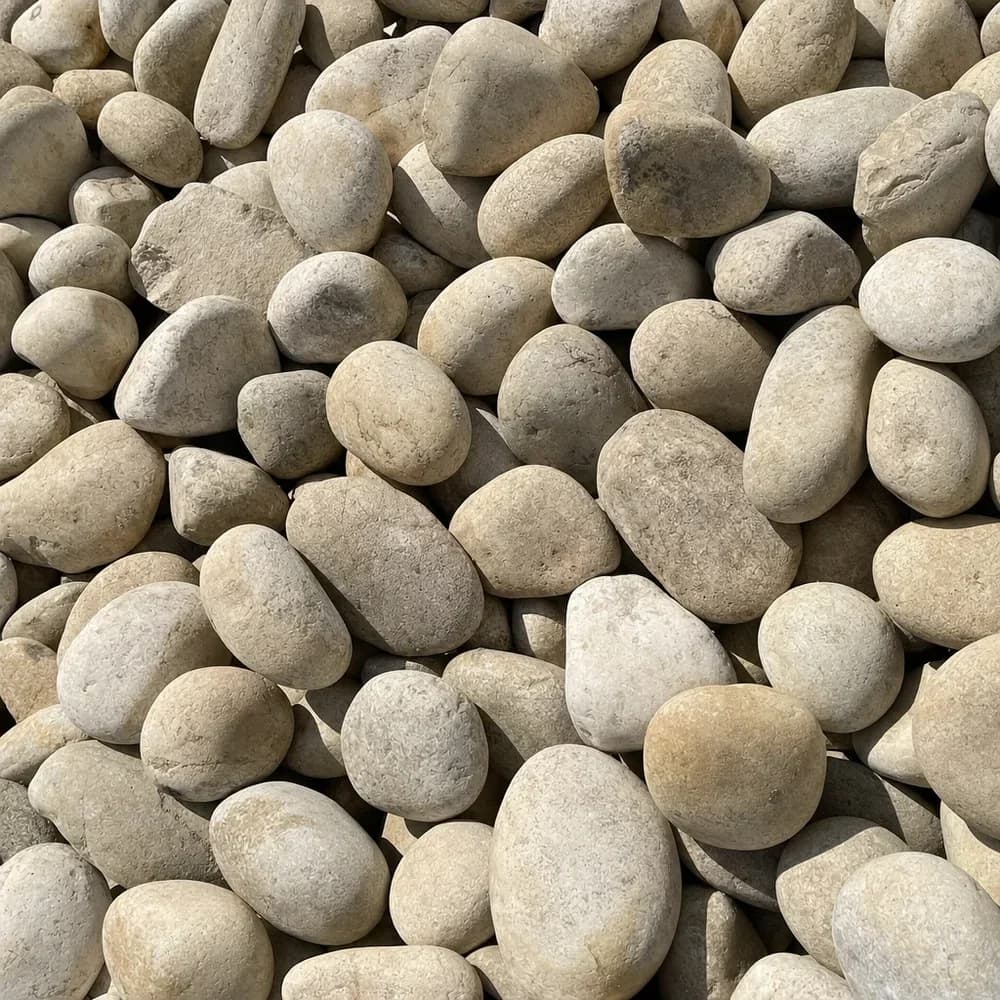
Most orders for this one arrive as a correction. Somebody laid crushed stone down the side yard or around a patio, then found out what sharp angular rock feels like under bare feet on a hot afternoon, or watched a dog refuse to cross it. 3/8" Natural Pea Gravel is what gets ordered next: small, naturally rounded stones about 3/8 inch across, in tans, creams, grays, browns and the occasional red, with no broken edges anywhere in the load.
Rounded, warm-toned and about 3/8 inch in the hand
Pour a handful out and the difference from crushed stone is obvious. Every piece is water-worn, so there are no points and no flat fractured faces, and the load pours and rakes almost like a coarse grain rather than locking up. The color is mixed rather than uniform, which is why it reads as natural ground cover instead of as a construction material, and the color is the stone itself rather than a coating, so it does not fade off the way dyed products do.
Wet, it goes noticeably darker and the reds and browns come forward, which is worth knowing before you choose it for a spot that gets a downspout or a sprinkler on it several times a week.
Where 3/8" natural pea gravel earns a place on a sandy lot
It works where people are, and where nothing heavy is. A patio surround or a fire pit area where bare feet are likely. A side-yard dog run, where rounded stone is easy on paws, drains after an afternoon storm and does not hold smell the way bark does. A garden path with a defined edge. A splash strip under a roof drip line or at the base of a downspout, where water hitting bare sand would otherwise dig a channel. Beds and borders in the shaded strip along a fence where grass has given up.
The common thread is that the gravel is a finish, not a structure. It sits on a prepared surface and does one job: covering ground comfortably while letting water through.
The turnaround, the slope and the places it rolls away from
Rounded stone moves. That is the trade for the comfort, and it rules out a few jobs entirely.
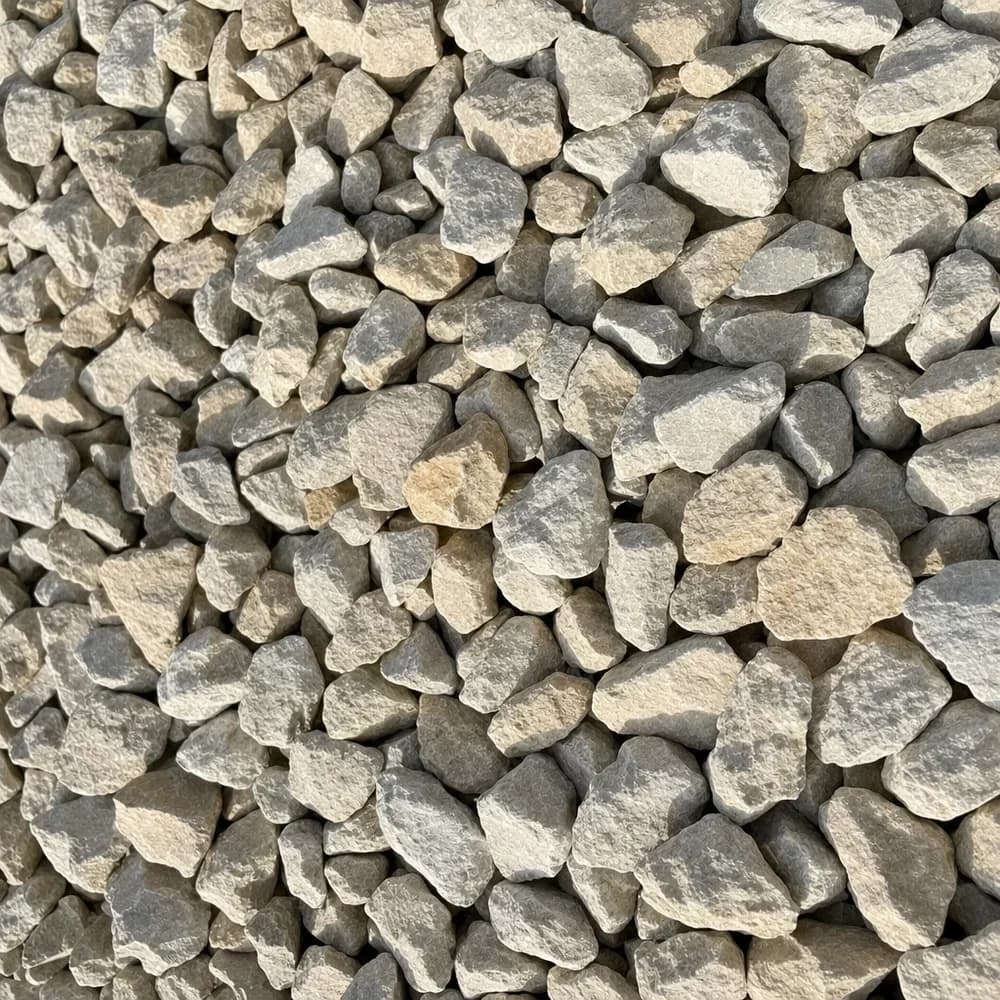
A vehicle turnaround or a parking pad is the clearest one. A tire turning on rounded gravel pushes it sideways rather than rolling over it, so the stone migrates into windrows and bare patches appear where the wheels track. If that is the job, a graded angular driveway mix over a compacted limerock base is the material, and a hypothetical 20 ft by 22 ft turnaround at 3 inches works out at 440 sq ft x 0.25 = 110 cubic feet, 110 / 27 = about 4.1 cubic yards, or roughly 5.7 tons of that material rather than this one.
It is also wrong on any real slope, where it creeps downhill with every rain, and wrong as a paver bedding course, where it will not screed or hold a level. And it is not a load-bearing layer: nothing about a rounded 3/8 inch stone spreads weight.
Two inches over a prepared base, and why three is worse
Depth is where people overdo it. Two inches over fabric on a prepared, leveled subgrade is the number for a walked-on area. At three inches or more, feet sink into it, a pushchair or a wheelbarrow bogs down, and it feels like walking in dry sand, which on this lot is exactly what you were trying to get away from.
Prepare properly underneath. Strip the turf and organic layer, level the ground, lay a non-woven fabric, then set the edging before any gravel goes down. On soft, low ground a thin compacted base under the fabric keeps the finished surface from dishing over the first wet season.
Containment is not optional. Steel, aluminum, timber or a course of set pavers, standing proud enough that the gravel sits below the top of the edge rather than level with it. Every gap in that edge is where the load leaves.
Yards and tons for a spa surround and a 4 by 40 dog run
The calculator takes feet for length and width, inches for depth, handles several areas at once, and runs (L x W x D/12) / 27 = cubic yards before converting by density. This site publishes pea gravel at about 2,800 lb per cubic yard, roughly 1.40 tons per yard. Two hypothetical examples:
- A 3 ft surround around an 8 ft by 8 ft spa, 2 inches deep. Outer area 14 x 14 = 196 sq ft, less the spa at 64 sq ft, leaving 132 sq ft. 132 x (2/12) = 22 cubic feet. 22 / 27 = about 0.8 cubic yards, or roughly 1.1 tons. The spa itself sits on a solid pad, not on the gravel.
- A side-yard dog run, 4 ft by 40 ft at 2 inches. 4 x 40 = 160 sq ft. 160 x (2/12) = about 26.7 cubic feet. 26.7 / 27 = about 1 cubic yard, or roughly 1.4 tons.
Run your own measurements through the pea gravel calculator. Small areas are worth checking twice, because the difference between two inches and three is half as much material again.
What sits under it, beside it and instead of it
Under it: fabric always, and a compacted base where the ground is soft or the area takes a cart. Beside it: a larger river rock reads as the same family at a bigger scale and suits a dry creek line or a splash zone with real flow through it. Instead of it: a finer walkway gravel where a path has to take a wheel and stay firm, or a compacted fines surface where the path must be genuinely level.
When you have a figure, pick a quantity and a delivery date on this page. Delivery is arranged at checkout by ZIP code, and the truck needs a clear route to a tip spot, preferably a hard surface, since rounded gravel tipped onto grass is difficult to pick up cleanly.
Quickly Calculate How Much You Need
Material: 3/8" Natural Pea Gravel
How to Measure
Measure the length and width of your project area in feet
Decide on depth in inches (2" for landscaping, 4" for driveways)
Enter the values above and we'll calculate the tonnage you need
Need help figuring out the right amount? We can help!
Call or text us at (813) 896-2664 and we'll help you calculate the right quantity for your project.
Not sure how much you need? The Pea Gravel Calculator has depth guides, coverage charts and worked examples for this material.
Frequently Asked Questions About 3/8" Natural Pea Gravel
Customer Reviews
Ordered natural pea gravel from them and the price felt fair for what I got. Delivery showed up when they said it would, so I'm really happy with the whole thing.
Jennifer W. · Cape Coral, FL · Verified Buyer
Had natural pea gravel delivered by these guys, showed up the day they promised and the free delivery was a nice bonus.
Luis I. · St. Petersburg, FL · Verified Buyer
Decided on natural pea gravel from these guys and it showed up right when expected, with free delivery too. Really happy with how it looks, I'd definitely order again and recommend them.
Tony N. · St. Petersburg, FL · Verified Buyer
Picked up natural pea gravel from the team and it was exactly what I needed. Super happy with it, would definitely order again and recommend them.
Megan E. · St. Petersburg, FL · Verified Buyer
Decided on natural pea gravel from these guys, and it was just what I ordered. Free delivery was a nice bonus, super happy with how it turned out.
Karen K. · Miami, FL · Verified Buyer
3/8" Natural Pea Gravel has 5 verified customer reviews with an average rating of 5 out of 5.
3/8" Natural Pea Gravel delivery across Florida
- Jacksonville
- Miami
- Tampa
- Orlando
- St Petersburg
- Port St Lucie
- Hialeah
- Cape Coral
- Tallahassee
- Fort Lauderdale
- Pembroke Pines
- Hollywood