Pea Gravel Calculator for a Side Path and a Fall Zone
Enter your project dimensions
Pace out the two pea gravel jobs in a typical yard and they look comparable: a narrow strip down the side of the house, and a square under the swing set. One of them is a bucket job and the other is a truck. The pea gravel calculator shows you which is which before you order, because on this material it is depth, not footprint, that decides the ticket.
A side path against a swing-set fall zone, ten tons apart
Both of these are hypothetical, with the arithmetic written out.
The side path runs 36 feet from the gate to the porch steps at 3.5 feet wide, which is 126 square feet, laid 3 inches deep. 126 x 3 = 378, divided by 12 is 31.5 cubic feet, divided by 27 is 1.17 cubic yards. Pea gravel is published on this site at about 2,800 lb a cubic yard, or 1.40 tons, so that is 1.63 tons. Call it a ton and a half.
The fall zone under the play set is 16 by 14 feet, which is 224 square feet, and it has to hold a full 12 inches of loose material. 224 x 12 = 2,688, divided by 12 is 224 cubic feet, divided by 27 is 8.30 cubic yards, or 11.6 tons.
The play area is not quite twice the footprint of the path and takes about seven times the stone. Anyone eyeballing the second job from the first will order about a quarter of what they need.
What the pea gravel calculator asks, and what the tape has to settle first
Depth is the field that matters here, so decide it before you open the tool. Two to three inches is the working range anywhere people walk. Under two inches and the ground shows through within a season. Over three and every step sinks, which readers describe as walking on dry beach sand. Play fall zones are the exception and want nine to twelve inches maintained, checked against the manual for the equipment. What the tool then sends you to is landscape pea gravel, which is not sold as certified playground surfacing, and the required depth, the fall-zone footprint and the maintained depth all come from the equipment manufacturer's instructions rather than from us.
With that settled, the rest is quick. Rectangle takes a length and a width in feet. Circle takes a diameter in feet and handles a fire pit surround or a tree ring in one entry. Multiple areas totals as many as five separate pieces, which is how a path, a landing at the steps and a border strip go in together. Depth is in inches, from a quarter inch up to 24, so a 12-inch fall zone is entered as 12. The material select sets the weight behind the tons figure, and a checkbox adds an optional 5 percent for compaction and spillage. Results come back as cubic yards, tons and cubic feet, with the option of an emailed copy.
Cubic feet to yards, and the 2,800 pounds a yard of pea rock carries
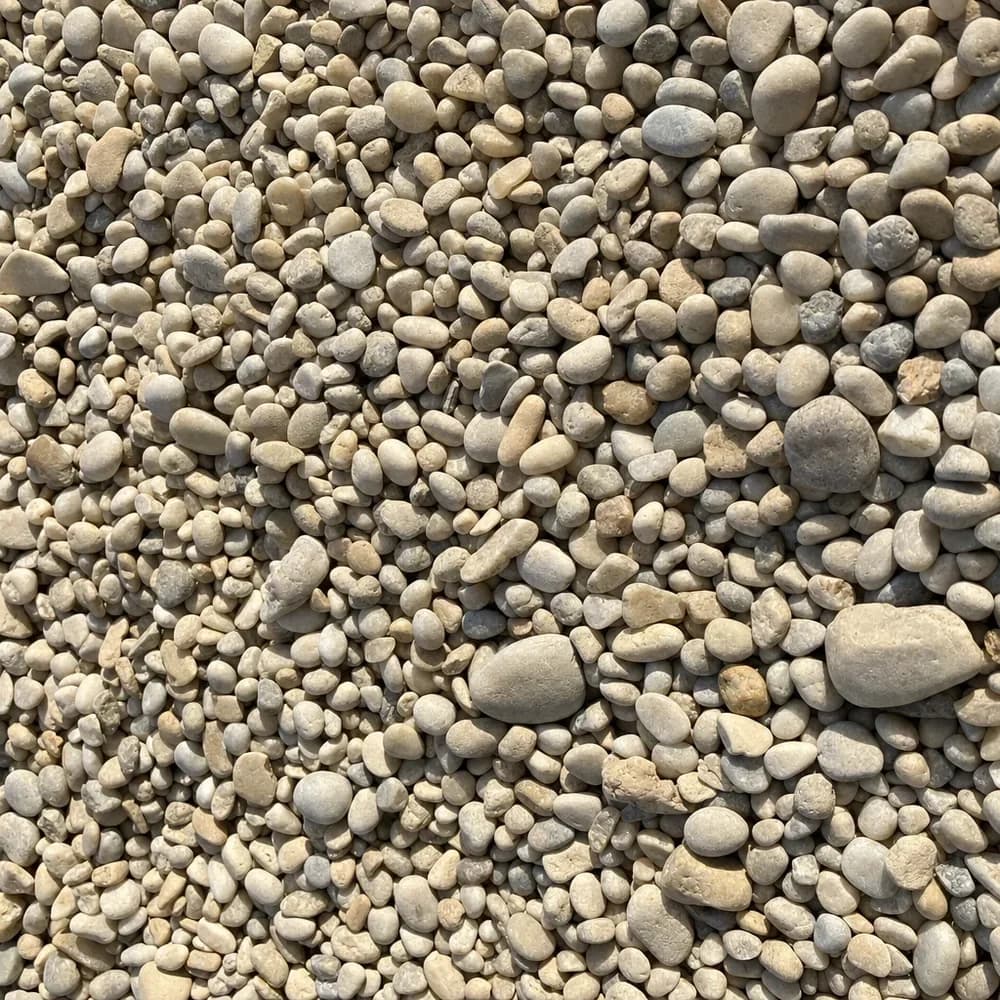
Rounded stone feels lighter underfoot than crushed rock, which misleads people about weight. It is not lighter. Pea gravel publishes at the same roughly 2,800 lb a cubic yard, or 1.40 tons, as #57 Limestone and driveway gravel, because those smooth 3/8 inch pieces nest together and leave less air between them than their shape suggests.
The conversion behind the three output boxes is the same one every time. Square feet times depth in inches, divided by 12, gives cubic feet. Divided by 27, that gives cubic yards, a yard being a three-foot cube. Multiplied by 1.40, the yards give tons.
For quick checks on site, a ton of pea gravel spreads about 116 square feet at 2 inches and about 77 square feet at 3. At the 12 inches a fall zone needs, one ton covers roughly 19 square feet, which is the number that explains the play-set example above better than any other line on this page.
Ordering a bucket or two spare against rainy-season migration
Round stone does not interlock, so it goes where water and feet push it. In this state that is a rainy-season problem more than a wear problem: an afternoon downpour on a slope steeper than about five percent will carry loose gravel downhill in a single storm, and a border set flush with the surface lets the stone roll out into the grass for the rest of the year.
Two fixes, both cheap at the planning stage. Set steel, aluminum, timber or paver edging so it stands about an inch above the finished gravel. On real slope, put a honeycomb stabilizing grid under the stone, or use angular Walkway Gravel on that stretch instead and save the pea gravel for the level ground.
Then order a fraction long. The 5 percent checkbox covers spillage and the material that vanishes into the wheelbarrow route, which is the right size of allowance for a decorative surface that is not being compacted. Beyond that, a couple of buckets held back in a lidded tub is worth more than a spare half ton: it tops up the traffic strip each spring and refills the low corner after the first tropical rain of the summer.
Rounded pea gravel, angular walkway gravel and the screenings underneath
A seating area needs something under it. Bare sand lets chair legs and table feet drop straight through the gravel, so put two compacted inches of Stone Screenings down first, sized on the stone calculator, and finish with two to three inches of 3/8" Natural Pea Gravel on top.
Choosing between materials on the same footprint is easy enough to test. Pea gravel is the comfortable one underfoot and the one that moves. Walkway gravel has angular faces that lock on a grade and is the better choice for a sloped or heavily used route. River Rock is larger and belongs in beds and splash strips rather than under feet, and it is sized on the river rock calculator. Run whichever you are considering through the tool on the same dimensions and compare the tonnage before you commit.
When the figure looks right, open the product page to pick a quantity and a delivery date, and choose a drop spot on firm ground close to the work.
Common questions
The path runs downhill to the back gate. Do I measure the slope or the flat distance?
Measure along the ground, following the slope with the tape, since that is the surface the stone actually covers. The steeper answer matters more than the extra foot or two of area: past about five percent, plan on edging that stands proud and either a stabilizing grid beneath the gravel or angular stone on that section.
My seating area is a rectangle with a square landing off one corner. Can I do it in one go?
Yes. Use Multiple areas, enter the main rectangle and the landing separately, and butt them at the shared edge rather than overlapping. Up to five pieces can go into one total, and they all share the depth you set, so keep separate depths for separate runs.
Should the edging be inside or outside the measurement?
Measure to the inside face, because that is the area the gravel fills. If the edging is not installed yet, measure where you intend the inside face to sit. Do not forget the edging itself needs to finish about an inch above the gravel, which means setting it before the stone rather than trying to work it in afterwards.
The fire pit circle is not quite round. What diameter do I use?
Take two measurements across it at right angles and average them, then use Circle mode. If the shape is genuinely irregular, put the smallest circle that contains it into the tool and accept a little spare, which at three inches deep is a matter of a wheelbarrow rather than a delivery.
How do I order the screenings under the surface and the gravel on top?
Run the calculator twice on the same footprint. Two inches of screenings first, changing the material select so the weight matches, then two to three inches of pea gravel. Order the two lines together and have them dropped as separate piles, screenings nearest the work, because that layer goes down and gets compacted before the gravel arrives on top of it.
Related calculators
Under two tons covers most patios.
3/8 inch natural pea gravel, priced by the ton, delivered free.