River Rock for Florida Beds and Swales
Florida sand can shift around planted areas; River Rock adds smooth, rounded cover that lets water pass through.
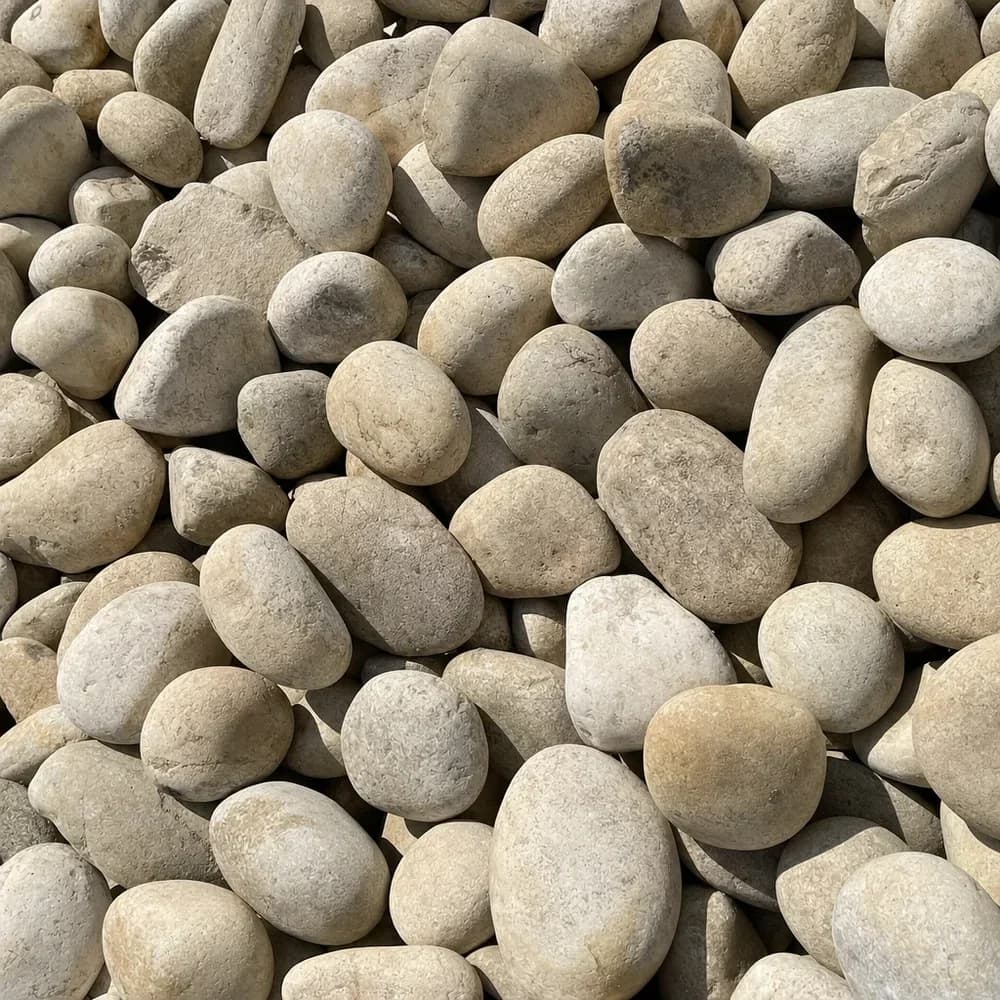
- Size: 1 inch to 3 inches
- Type: Smooth, naturally rounded stones
- Color: Tans, grays, browns and occasional reds
From $889 for 1 ton, delivery included (larger loads cost significantly less per ton)
Free delivery included
Free delivery anywhere in Florida
Pick a delivery date
Weekday delivery, earliest Oct 30
“Went with them for River Rock and I'm really happy with how it turned out. Pricing was fair and felt like a good value for the amount I got. I'd definitely order from them again and recommend them.”
Megan R. · Verified Buyer
Get a Free Quote
Fill out the form and our sales team will get back to you within the hour.
Size and Grading
- Size
- 1 inch to 3 inches
- Type
- Smooth, naturally rounded stones
- Color
- Tans, grays, browns and occasional reds
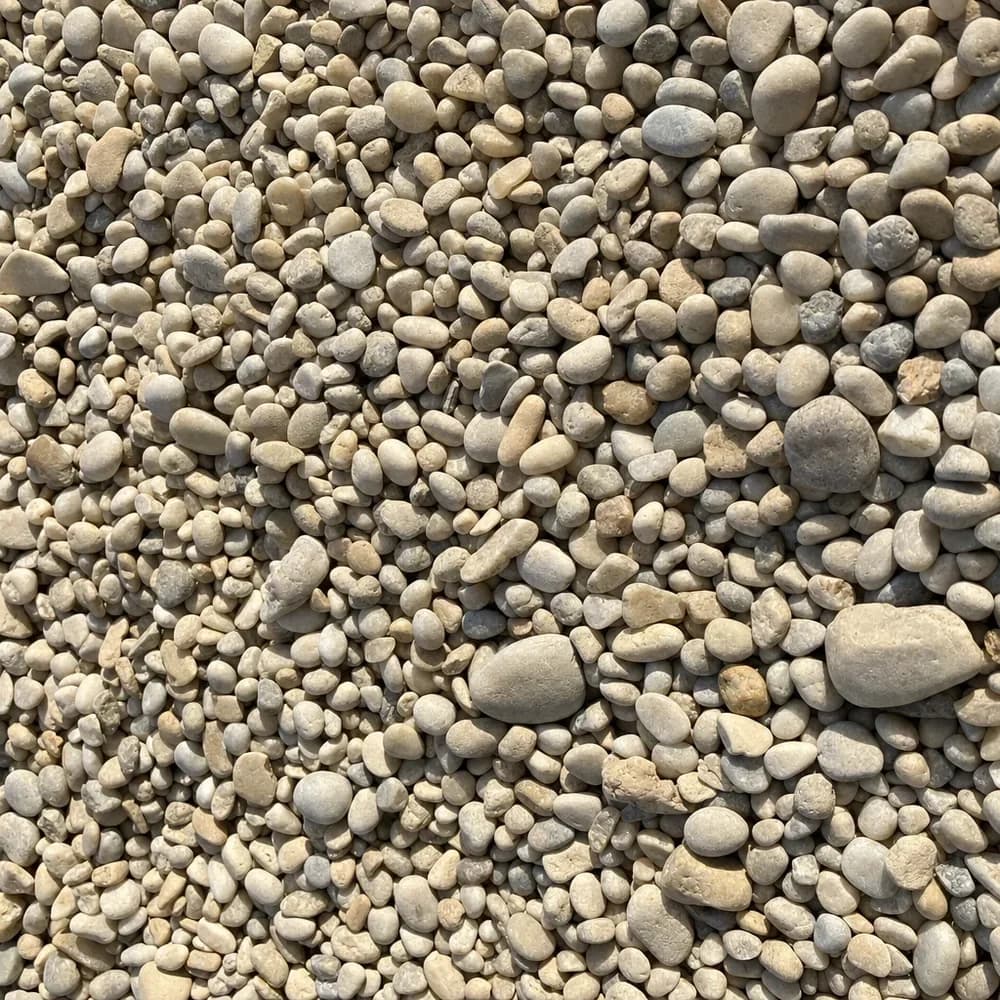
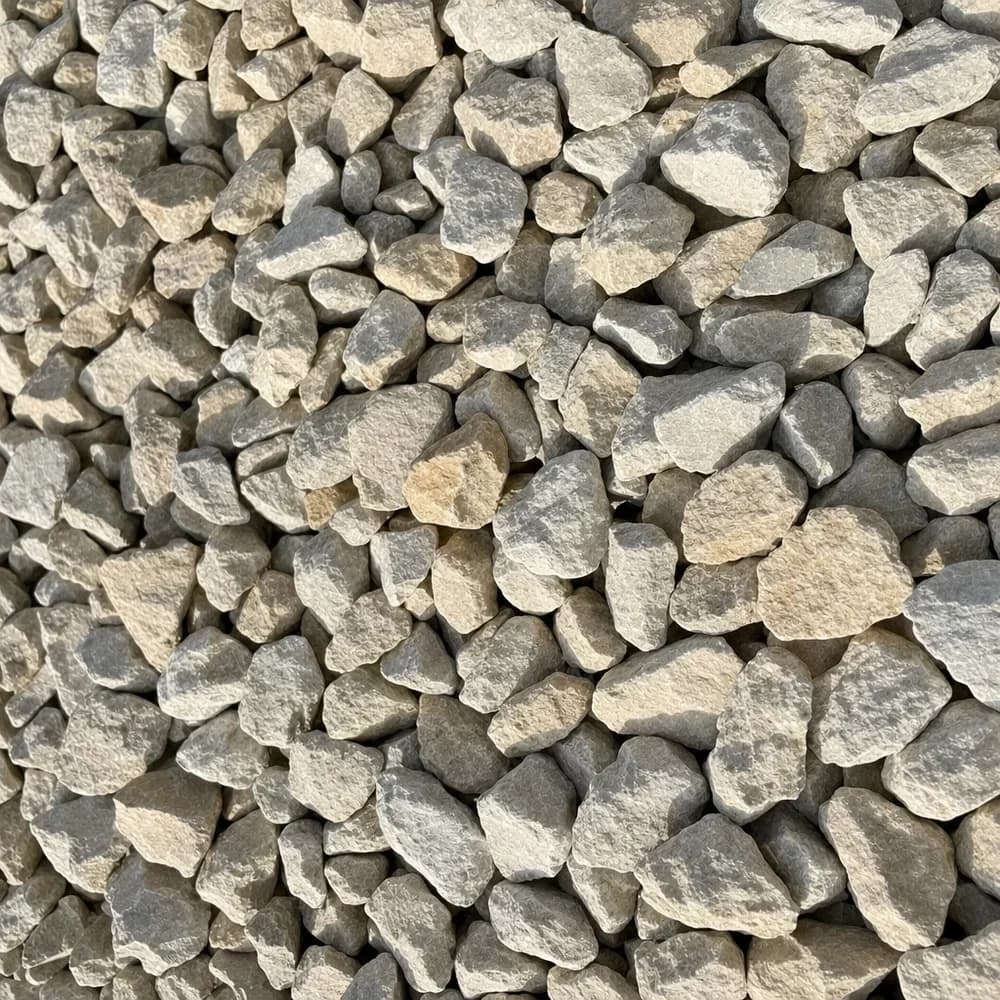
Three products get confused at this size, and the wrong pick shows up the first time someone walks on it. River Rock is 1 inch to 3 inches, smooth and naturally rounded, in tans, grays, browns and occasional reds. Pea gravel is a fraction of that size and behaves like a liquid underfoot. The large grade is heavier and coarser, made for dry creek beds with real water in them. The middle size is the one that stays put in a bed, reads as stone rather than gravel, and still moves with a shovel.
The dry-season window when Florida beds get rocked
This work has an obvious season and most people miss it. Beds get stripped, shaped and stoned easily in the dry months, roughly November through April in the south and the drier stretches between fronts further north. Ground is firm, a wheelbarrow rolls across a lawn without cutting it, and the fabric goes down flat instead of floating.
The wet season does the opposite. Late May into October, an afternoon storm arrives most days, and a half-finished bed with fabric pinned and no stone on it is a bed with the fabric in the neighbor's yard. If the job has to happen in summer, break it into sections small enough to finish in a morning rather than opening the whole run at once.
Shaping, fabric and edging before the first stone lands
Grade first. Stone follows the shape underneath it exactly, so a dish in the ground becomes a puddle with rock in it. Set the fall away from the house at a quarter inch per foot or so, and for a drainage feature, shape the channel before anything goes in so water has a defined route.
Then the fabric. In sandy ground a woven or non-woven landscape fabric does two jobs: it keeps weeds down and, more importantly, it keeps the stone from working its way into the sand. Skip it and a two-inch bed is a one-inch bed with stones buried under it inside a couple of years. Pin it properly, overlap the seams by six inches or more.
Then the edging, which is the step people leave out. Rounded stone does not stay behind an imaginary line. Steel, aluminum, concrete curbing, a soldier course of pavers, or a trench edge cut with a spade will all work, but something has to be there.
Lane swales, garden paths and the strip around new sod
The stone earns its place in three ways on Florida properties. As a cover in planting beds and under trees, it does not decompose, does not need annual topping up like organic mulch, and does not hold moisture against a trunk. As a lining for swales, dry creek runs and drip lines under a roof edge, it takes the impact of concentrated water and lets it soak in rather than scouring sand. As a border, it gives a clean transition between a hard surface and a planted area.
A word on the driving surface question, because it comes up with rural properties: rounded stone is the wrong material for a lane you drive. It rolls under tires, pushes to the edges and offers no bind at all. Along the lane is a different matter, and lining the swale beside it with river rock is a genuinely useful job.
Yards for a 45-foot path, a lane swale and a new sod border
The river rock calculator takes length and width in feet and depth in inches, handles rectangles, circles and up to five separate areas, and adds five percent extra by default. Two inches is the working depth for a decorative bed and three for anything moving water. Three hypothetical examples:
- A garden path, 3 ft by 45 ft at 2 inches. 3 x 45 = 135 sq ft. 135 x (2/12) = 22.5 cubic feet. 22.5 / 27 = about 0.85 cubic yards.
- The swale beside a 400 ft rural lane, 2 ft wide at 3 inches. 400 x 2 = 800 sq ft. 800 x 0.25 = 200 cubic feet. 200 / 27 = about 7.4 cubic yards.
- A stone border around new sod, 1.5 ft wide following a 120 ft perimeter, at 3 inches. 120 x 1.5 = 180 sq ft. 180 x 0.25 = 45 cubic feet. 45 / 27 = about 1.7 cubic yards.
This site publishes river rock at about 2,700 lb per cubic yard, roughly 1.35 tons per yard, so the path is approximately 1.1 tons (0.85 x 1.35), the swale about 10 tons (7.4 x 1.35) and the sod border about 2.3 tons (1.7 x 1.35). Put those cubic yards through the river rock calculator for the tonnage, then choose a quantity and a delivery date on this page. Delivery is arranged at checkout by ZIP code, and the truck needs clear access to somewhere it can tip. Stone this size wheelbarrows well but does not shovel easily, so tip as close to the bed as the access allows and bring a rake with stiff tines.
What a bed of river rock wants after its first wet season
Very little, and doing that little keeps it looking new. Rinse the beds with a hose once a year, because Florida rain carries fine sand and pollen that dulls the surface and makes the color look flat. Pull the few weeds that germinate in the organic matter collecting between stones rather than under them, and blow leaf litter off in the autumn so it does not compost in place and become a seedbed. Top up the high-traffic entry points every few years where stone gets kicked out. Nothing rots, so the bed does not need rebuilding.
Quickly Calculate How Much You Need
Material: River Rock
How to Measure
Measure the length and width of your project area in feet
Decide on depth in inches (2" for landscaping, 4" for driveways)
Enter the values above and we'll calculate the tonnage you need
Need help figuring out the right amount? We can help!
Call or text us at (813) 896-2664 and we'll help you calculate the right quantity for your project.
Not sure how much you need? The River Rock Calculator has depth guides, coverage charts and worked examples for this material.
Frequently Asked Questions About River Rock
Customer Reviews
Ordered River Rock from them and it was delivered right when they said it would be. Really happy with how it turned out, I'd definitely order again and recommend them.
Jeff C. · Fort Lauderdale, FL · Verified Buyer
Finished the planting bed
I used these to edge a planting bed. Their rounded shape and mixed tones gave it a more finished look. I was pleased with how well it fit the project at my home in Cape Coral, FL.
Avery K. · Orlando, FL · Verified Buyer
Had River Rock delivered by them and it was exactly what I needed. Price felt fair for the amount I got, definitely good value. The driver was friendly and took his time placing it carefully where I wanted it.
Karen S. · Fort Lauderdale, FL · Verified Buyer
Had River Rock delivered by the team and the free delivery was a huge plus. Ordering was a breeze, and I'm really happy with how everything turned out.
Luis C. · Orlando, FL · Verified Buyer
Went with them for River Rock and I'm really happy with how it turned out. Pricing was fair and felt like a good value for the amount I got. I'd definitely order from them again and recommend them.
Megan R. · Orlando, FL · Verified Buyer
Picked up on a small backyard project and ordered River Rock from Florida Rock Supply, and everything went really smoothly. They kept me updated the whole time, and I'm super happy with how it turned out.
Steve J. · Miami, FL · Verified Buyer
River Rock has 6 verified customer reviews with an average rating of 5 out of 5.